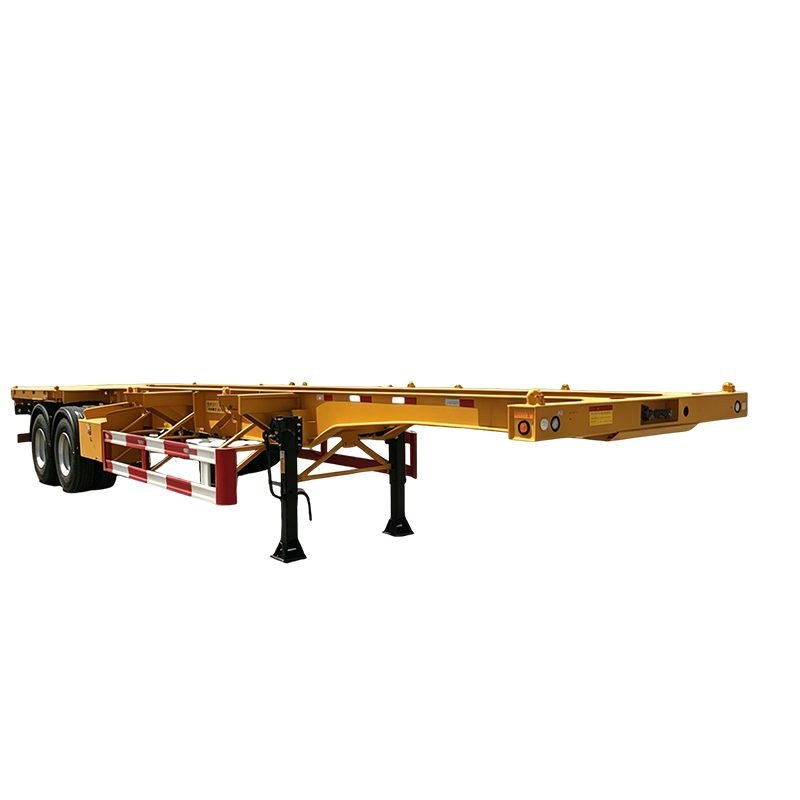
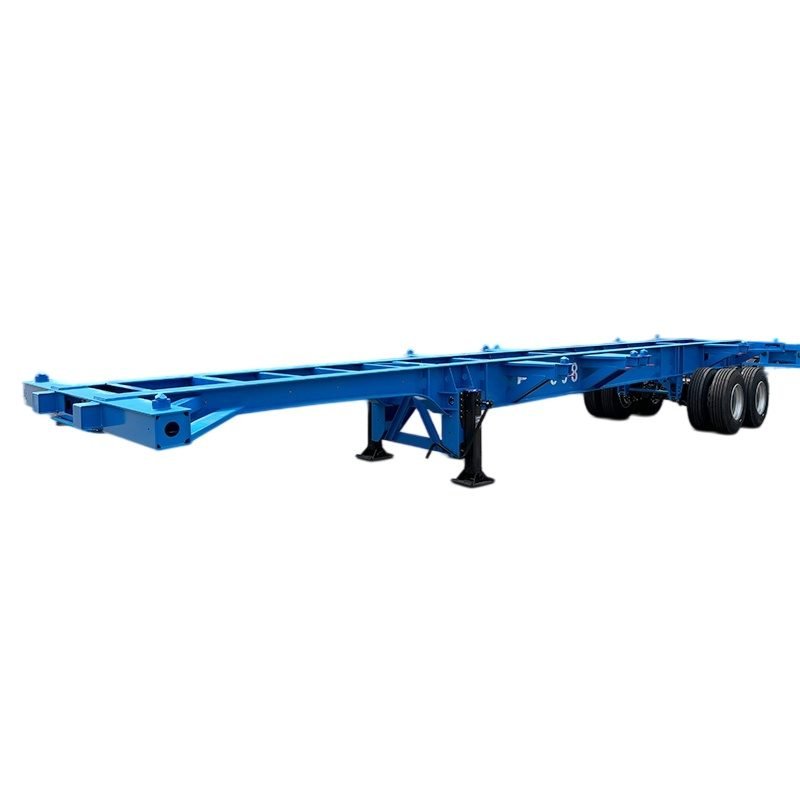
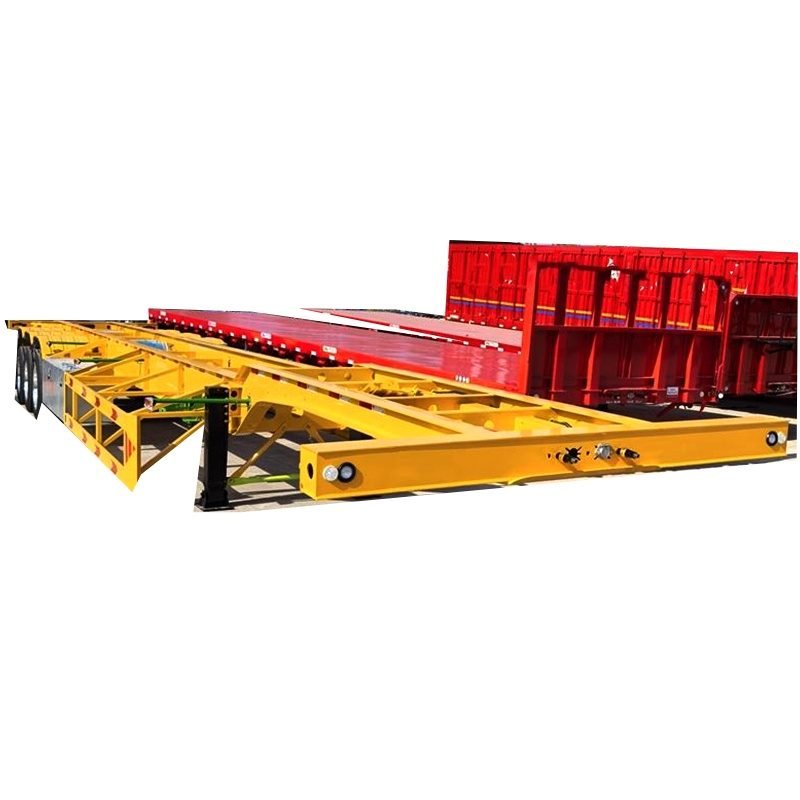
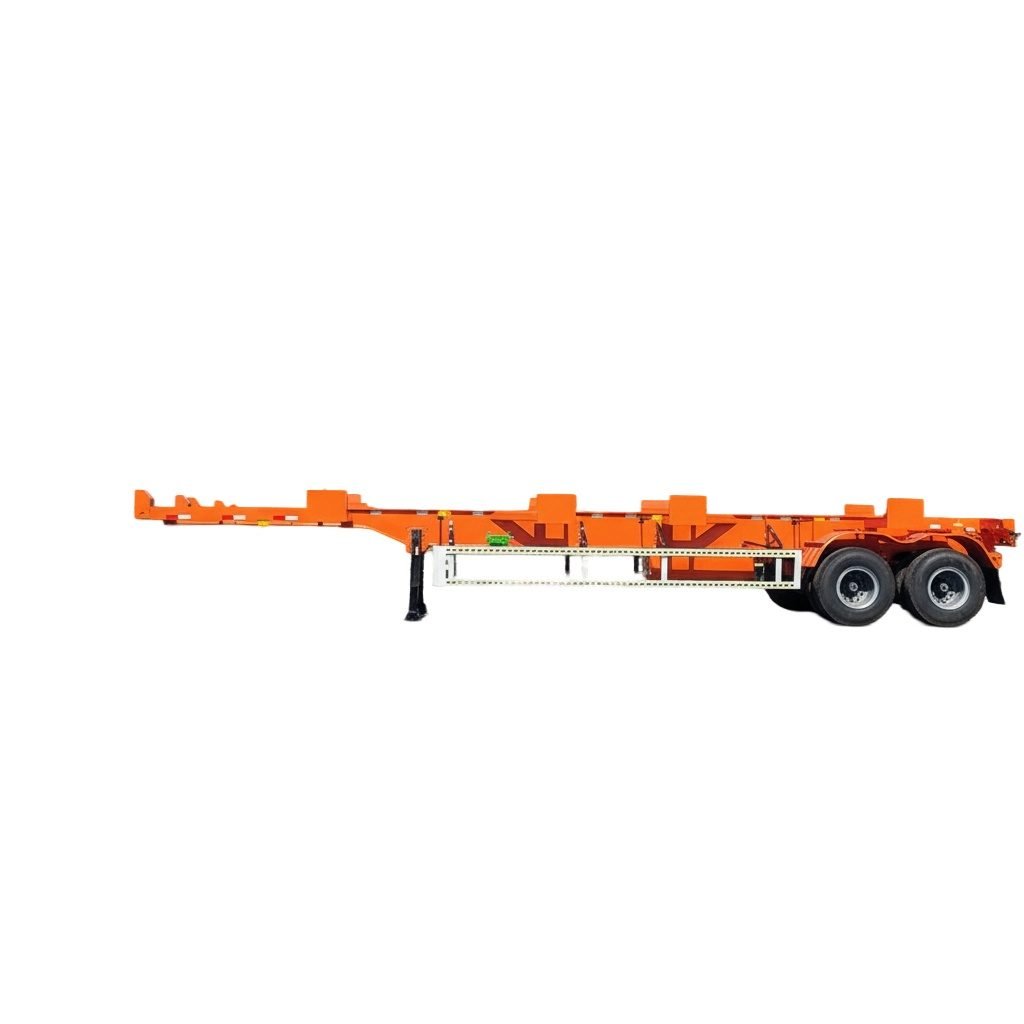
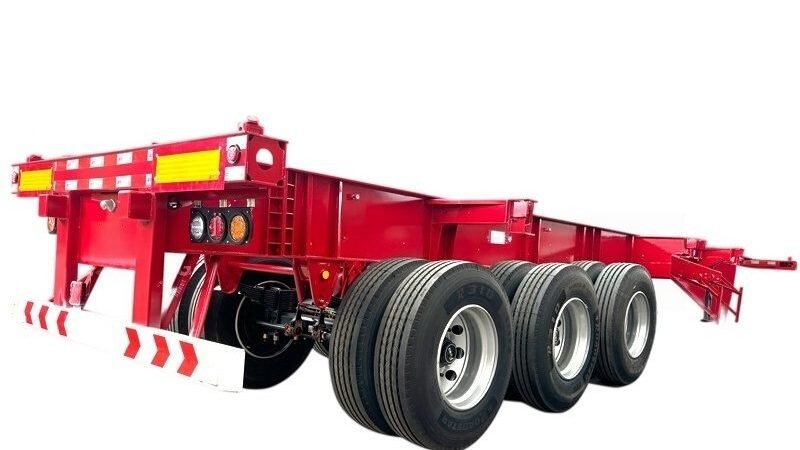
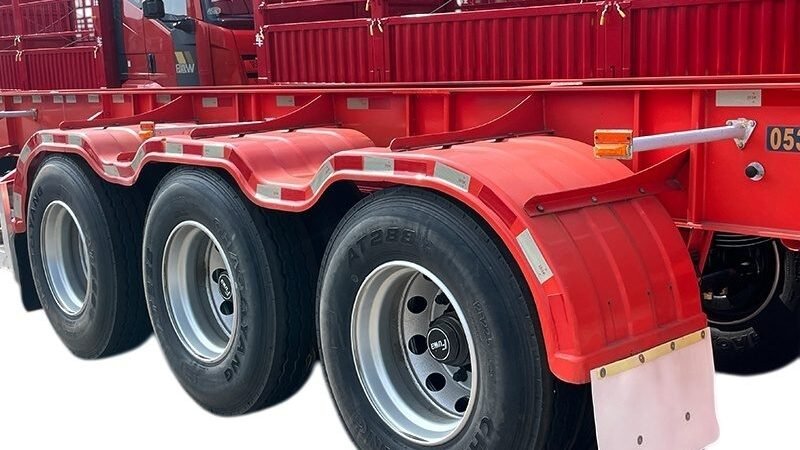
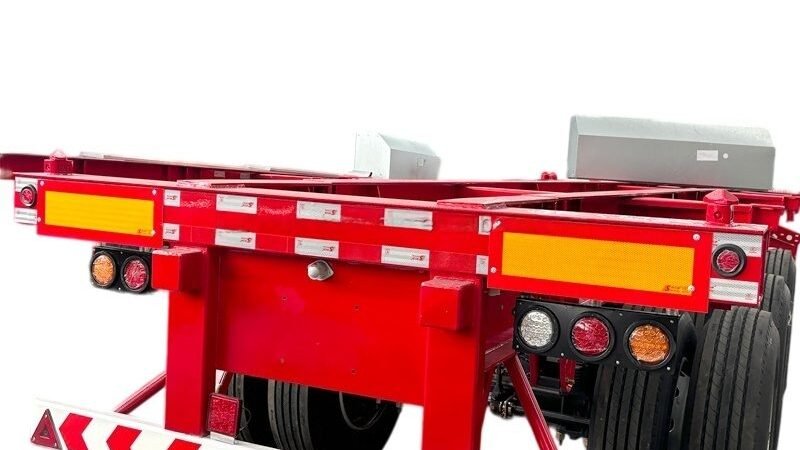
A skeleton semi trailer is a bare-frame chassis built to carry shipping containers (40 Gooseneck Skeletal Container Chassis). It has no floor or side walls. Instead, it uses twist locks to secure containers to a steel frame (this 20ft 40ft). This guide explains how to choose between 20ft and 40ft configurations (3 Axle 20ft 40ft Skeleton).
What Is a Skeleton Semi Trailer?
A skeleton semi trailer is a weight-saving platform for container haulage (3 Axle Skeleton Semi Trailer). The frame carries the load. Twist locks at fixed positions lock the container corners. Because the trailer has no cargo body, its own weight is low. That leaves more payload for the container.
These trailers suit port drayage, rail terminals and long-haul container transport. They work with standard ISO containers. Many models accept both 20ft and 40ft boxes on one chassis (3 Axle 40ft 20ft Skeleton).
The manufacturer builds these units in China (Mainland). Load capacity across the range spans from 15001-80000 KG. Heavier variants reach 50T or 60T.
20ft vs 40ft: Key Differences
The main choice is container length. A 20ft box is short and dense. A 40ft box is longer and spreads weight over more frame. Therefore, the frame layout and twist lock positions differ.
- 20ft containers concentrate load near the centre. The frame must handle high point loads.
- 40ft containers need a longer frame and more twist lock positions. Load spreads across a greater span.
- A combined 20ft/40ft chassis carries both sizes. This adds flexibility for mixed fleets.
For example, the Heavy Duty 20ft 40ft container skeleton semi trailer uses a dual-position layout. One trailer handles both container sizes. That reduces fleet complexity and spare-unit needs.

Specifications That Matter
Buyers should check a few core figures before ordering. Load capacity is the first. The product range covers 15001-80000 KG, with dedicated 50T and 60T models.
The 3 Axle Container Skeleton Semi Trailer 20ft 40ft Chassis offers a load capacity above 30000 KG. Its max payload is also above 30000 kg. Three axles spread weight and improve stability on long routes.
Axle count affects road rules and tyre cost. More axles usually mean higher legal payload in many markets. However, they also raise maintenance and tyre spend. Therefore, match axle count to local weight limits.
Check the following before you buy:
- Container sizes you haul most often.
- Maximum gross weight allowed in your region.
- Axle count and suspension type.
- Twist lock positions and condition.
- Frame steel grade and coating.
Choosing the Right Model
Start with your cargo mix. If you move only 40ft boxes, a single-position frame is simpler. If you handle both sizes, choose a combined chassis.
Next, set your payload target. For heavy dense cargo, a 50T or 60T rated frame is safer. For example, the 60 T Skeleton Semi Trailer for 20ft 40ft Container Haulage carries a 60 T load capacity and a 60 Ton max payload. That suits heavy container flows.
Then confirm axle count and braking setup. Three-axle units are common for general haulage. Finally, check twist lock quality and frame welds. These parts carry the full load.
Practical Buying Tips
Ask for a clear specification sheet before you commit. Confirm load capacity, axle count and container positions in writing. Compare figures across suppliers using the same units.
Inspect the frame coating. Container haulage exposes steel to salt and rain. Good paint or galvanising extends service life.
Check spare parts supply. Twist locks, brake chambers and suspension parts wear over time. A supplier with trailer parts in stock reduces downtime.
Besides the trailer, plan your container handling. Confirm that your yard and tractor units match the trailer height and coupling. Test one unit before a large order. This lowers risk on fleet purchases.
Conclusion
The right skeleton semi trailer depends on your container mix and payload needs. Match frame length, axle count and load rating to your routes. The manufacturer offers 20ft, 40ft and combined chassis options from 15001-80000 KG. Contact the manufacturer for a specification sheet and a quote for your fleet.
FAQ
What is a skeleton semi trailer used for?
It carries shipping containers on roads. It is common in port drayage, rail terminals and long-haul container transport.
Can one skeleton trailer carry both 20ft and 40ft containers?
Yes. Many combined chassis models carry both sizes. Twist locks sit at two positions on the frame.
What load capacity is available?
The range covers 15001-80000 KG. Dedicated models are rated at 50T and 60T.
How many axles should I choose?
It depends on local weight rules and your payload. Three-axle units are common for general container haulage.
Why is a skeleton trailer lighter than a flatbed?
It has no floor or side walls. The bare frame reduces tare weight and leaves more payload.
What should I check before buying?
Check load rating, axle count, twist lock positions, frame coating and spare parts supply.
Do you supply trailer parts as well?
Yes. The manufacturer supplies semi-trailers and trailer parts for export.