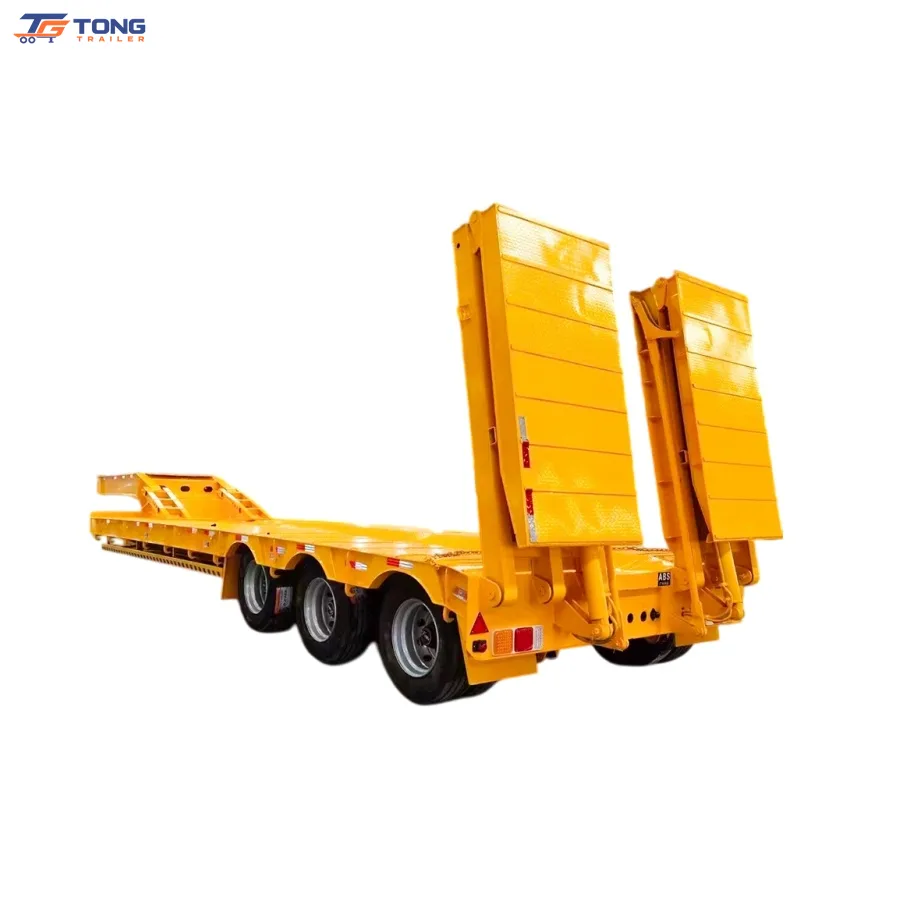
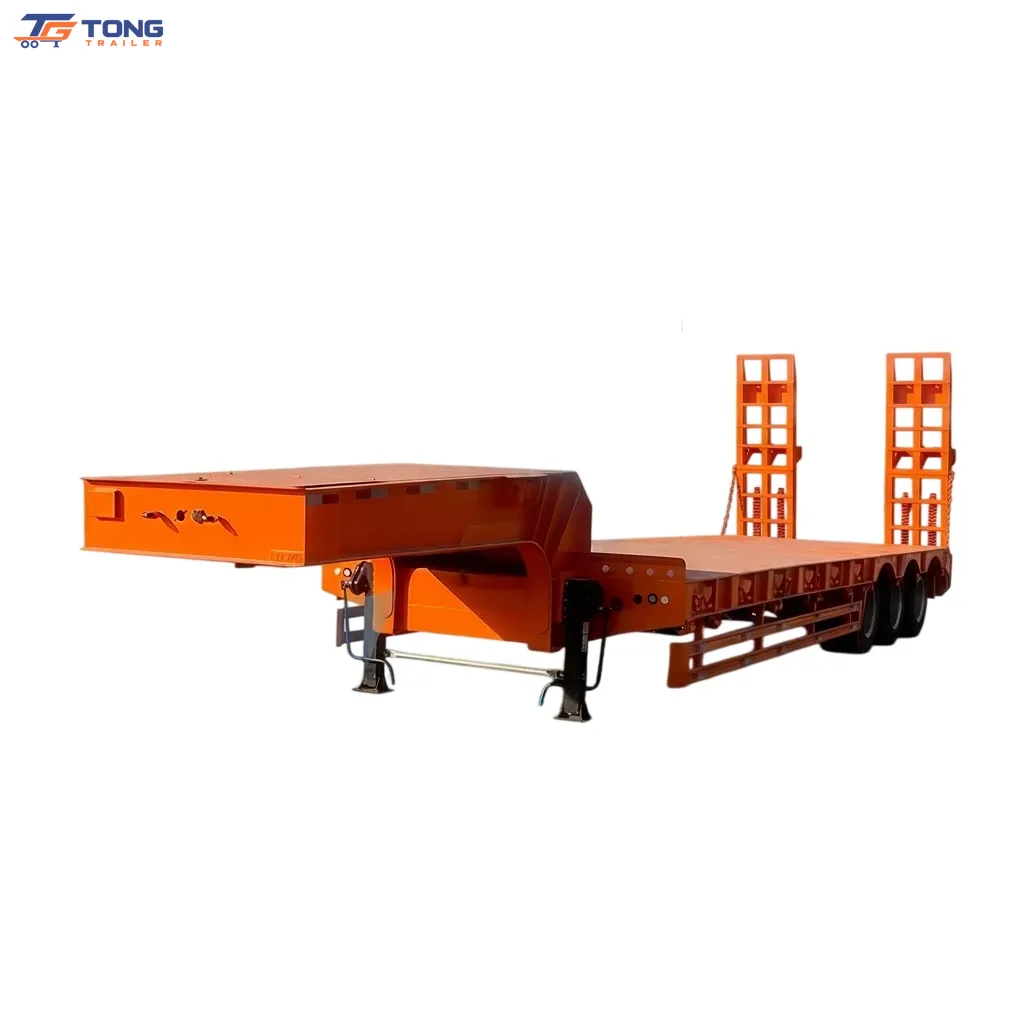
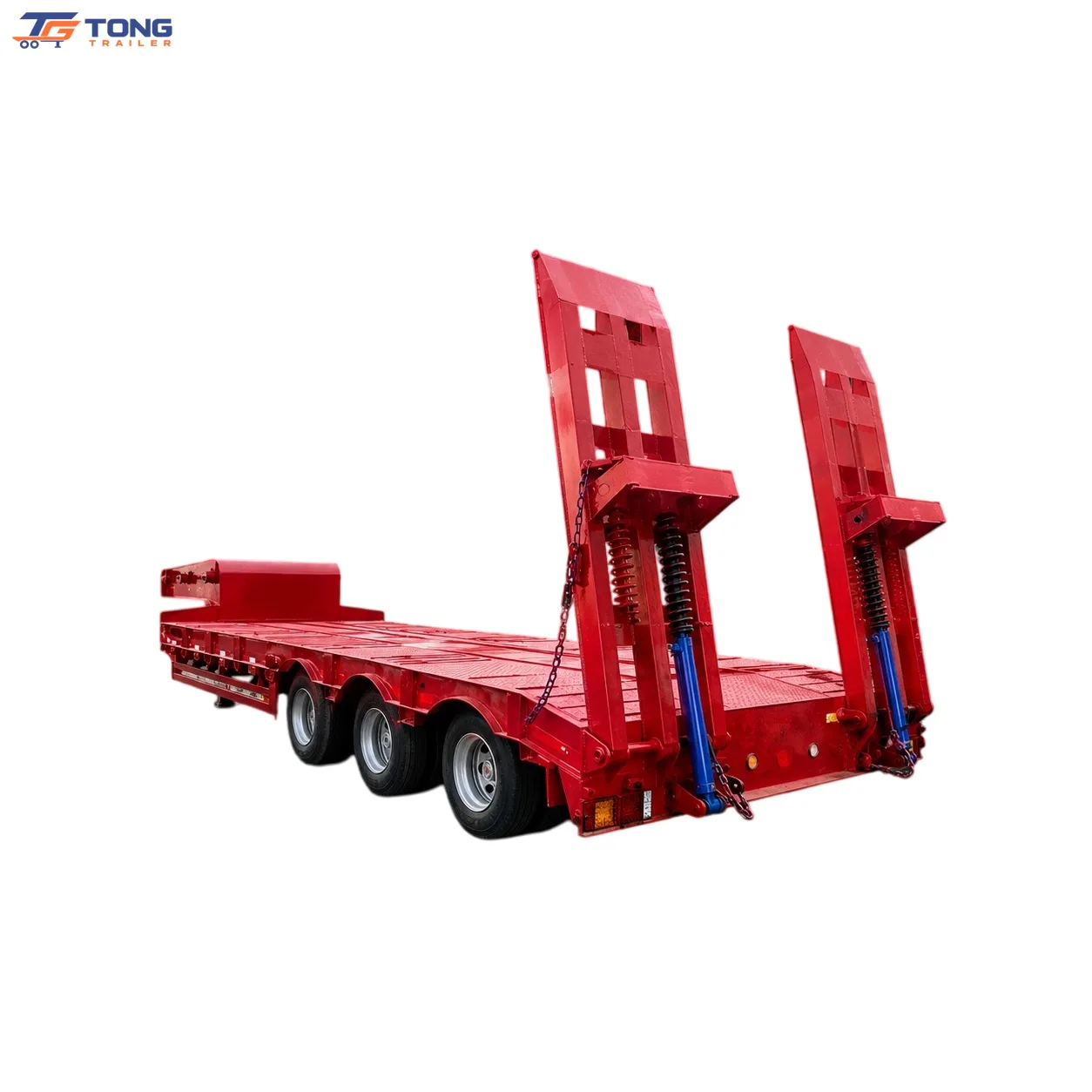
A lowbed trailer for excavator transport is a semi-trailer with a low deck (heavy load lowbed semi trailer). It carries heavy tracked machines safely on public roads (Heavy Duty Lowbed Semi Trailer). This guide explains payloads, axles and lengths for 60T to 150T jobs (3 axle lowbed trailer).
What Is a Lowbed Trailer for Excavator Transport?
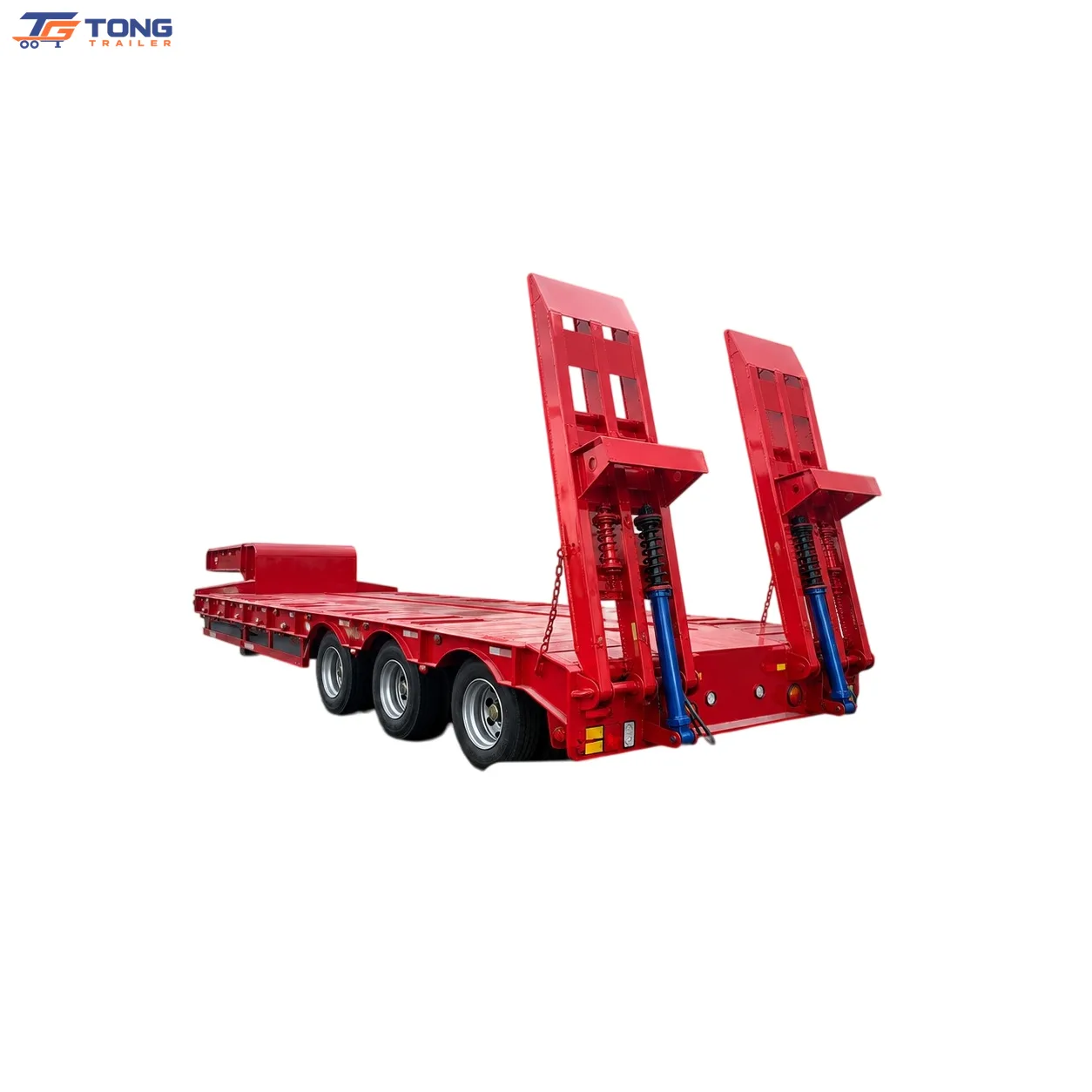
A lowbed semi-trailer has a dropped deck between the axles and the gooseneck (3 Axle Lowbed Semi Trailer). The low deck lowers the center of gravity. Therefore, tall machines like excavators travel more stable.
The main deck sits close to the ground. Loading ramps connect the rear of the deck to the ground. The excavator drives or winches onto the deck. Chains then secure it for the trip.
Tongtrailer builds these units in the heavy-duty semi-trailers manufacturing and export sector (80ton lowbed semi trailer for). Payload options are 60,000 / 80,000 / 100,000 / 150,000 KG. Custom payloads are available on request.

How to Choose the Right Payload
Payload is the first decision. Match it to your heaviest machine plus attachments. A bucket and counterweight add real weight. Always leave a safety margin.
Use this simple rule. Add the excavator weight, the attachment weight and the trailer accessory weight. Then compare the total to the rated payload.
| Machine Weight | Suggested Payload | Typical Use |
|---|---|---|
| Up to 40T | 60,000 KG | Mid-size excavators |
| 40T to 60T | 80,000 KG | Large excavators |
| 60T to 80T | 100,000 KG | Mining-class units |
| 80T and above | 150,000 KG | Ultra-heavy haulage |
However, weight is not the only factor. Deck length and axle count also matter. For example, a long boom needs a longer deck.
Specifications That Matter
Axle Configuration
Axle count spreads the load. Common setups are 3 axles, 4 axles, and 4-line 8-axle or 5-line 10-axle groups. More axles reduce the load per axle. This helps meet local road rules.
A 3-axle lowbed semi-trailer suits many 60T to 80T tasks. Heavier 100T and 150T loads often need 4 axles or more. The 8-axle and 10-axle configurations serve the largest machines.
Deck Length and Width
Overall length appears in the product data as 11,50 for some models. Always confirm the usable deck length. The deck must hold the full track length plus the boom.
A 50 ft (about 15.2 m) unit gives more room for long booms. Choose based on your machine dimensions, not habit.
Material and Build
These trailers use steel construction. Steel resists bending under concentrated track loads. Check the main beam depth and the deck plate thickness with your supplier.
Loading Method
Rear loading is standard. Ramps fold or detach for transport. Some buyers prefer a hydraulic gooseneck for faster setup. State your preference when ordering.
Applications and Market Notes
Lowbed trailers serve construction, mining, and heavy logistics. Fleet operators move excavators between sites daily. Distributors buy in small batches for resale.
Road regulations differ by country. Axle load limits, length limits and permit rules vary. Therefore, share your route and local rules with the supplier. Tongtrailer can then match the axle setup to your market.
Besides excavators, these trailers move bulldozers and loaders. A this tri axle handles mixed fleets well. One trailer type can cover several machine classes.
Practical Tips for Buyers
- Weigh your heaviest machine before you order.
- Confirm axle load limits in your country.
- Ask for the usable deck length, not just overall length.
- Check ramp type and loading angle.
- Plan tie-down points for track and boom.
- Request the payload rating in writing.
Also consider the tractor unit. The fifth wheel and engine power must match the loaded trailer. A weak tractor slows every trip.
For spare parts, keep common wear items in stock. Brake components, lights and tires are typical. Fast repairs reduce downtime.
Inspect the trailer on arrival. Check welds, paint and axle alignment. Document any issue with photos. This protects your warranty claim.
Conclusion
Choosing a lowbed trailer for excavator transport comes down to payload, axles and deck length. Match these three to your machine and your roads. Then confirm the build details with the manufacturer.
Tongtrailer offers lowbed semi-trailers from 60,000 KG to 150,000 KG. Configurations include 3 axles, 4 axles, and 8-axle or 10-axle groups. Send your machine weight and route details for a tailored quote.
FAQ
What payload options are available for a lowbed trailer for excavator?
Available payloads are 60,000 / 80,000 / 100,000 / 150,000 KG. Customized ratings are available on request.
How many axles does a lowbed semi-trailer need?
It depends on the load. A 3-axle unit suits many 60T to 80T jobs. Loads of 100T to 150T often need 4 axles or more.
What is the overall length of these lowbed trailers?
Some models list an overall length of 11,50. A 50 ft (about 15.2 m) unit is also available. Confirm usable deck length before ordering.
Can one lowbed trailer carry excavators, bulldozers and loaders?
Yes. These trailers are built for heavy equipment transport. That includes excavators, bulldozers and loaders.
What material are these lowbed semi-trailers made of?
The trailers use steel construction. Steel handles concentrated track loads well.
Can I order a custom payload or axle setup?
Yes. Payload can be customized on request. Axle configurations include 3 axles, 4 axles, and 4-line 8-axle or 5-line 10-axle groups.
How do I secure an excavator on a lowbed trailer?
Lower the boom, apply the brake, and use heavy chains on the tracks. Use four or more tie-down points.
Do I need permits for excavator transport?
Rules vary by country and route. Check local axle load and length limits before you move the machine.