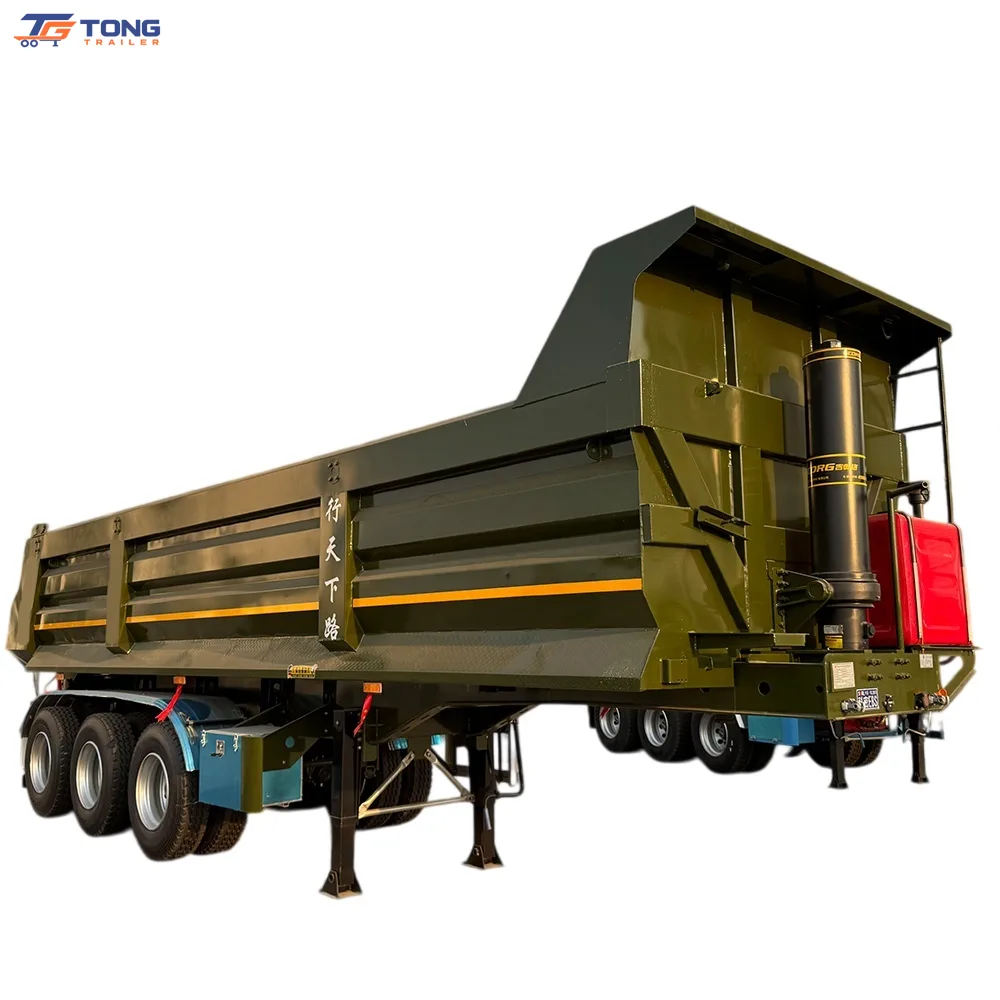
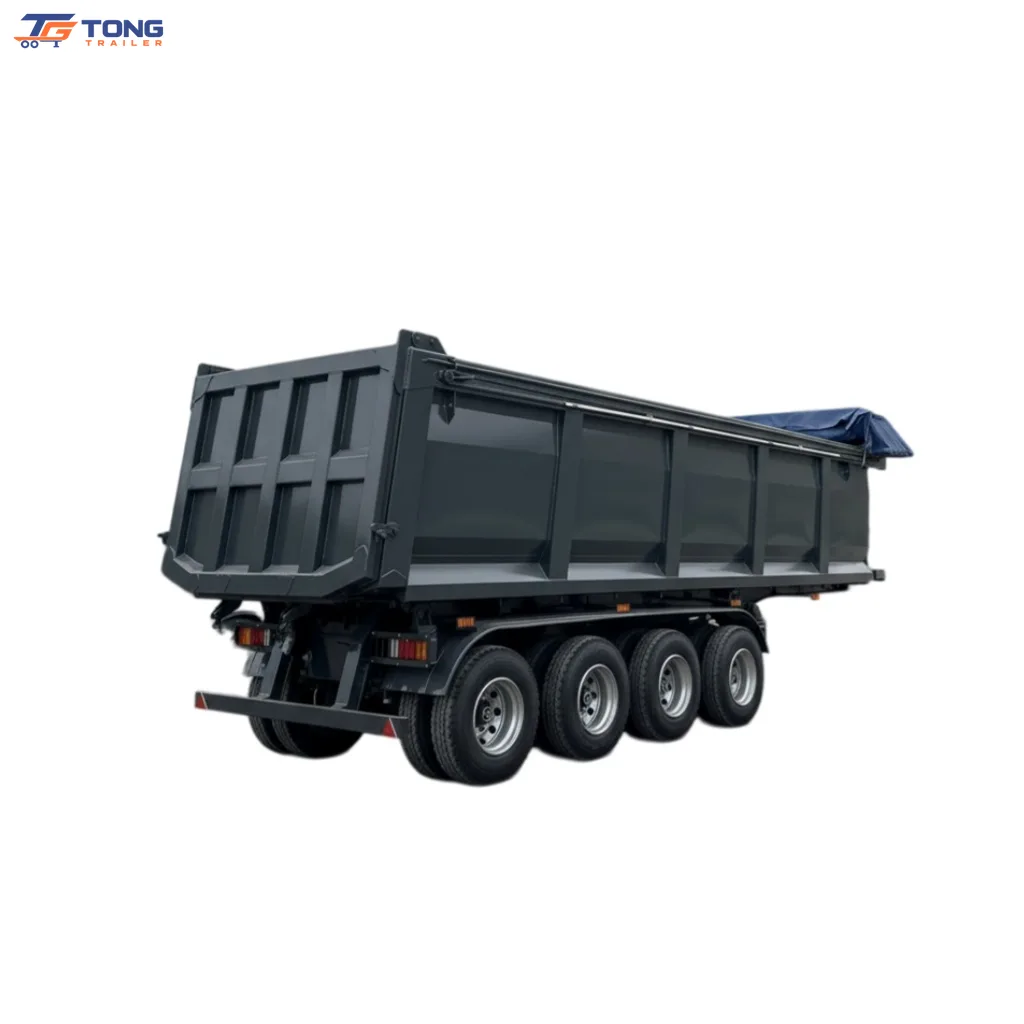
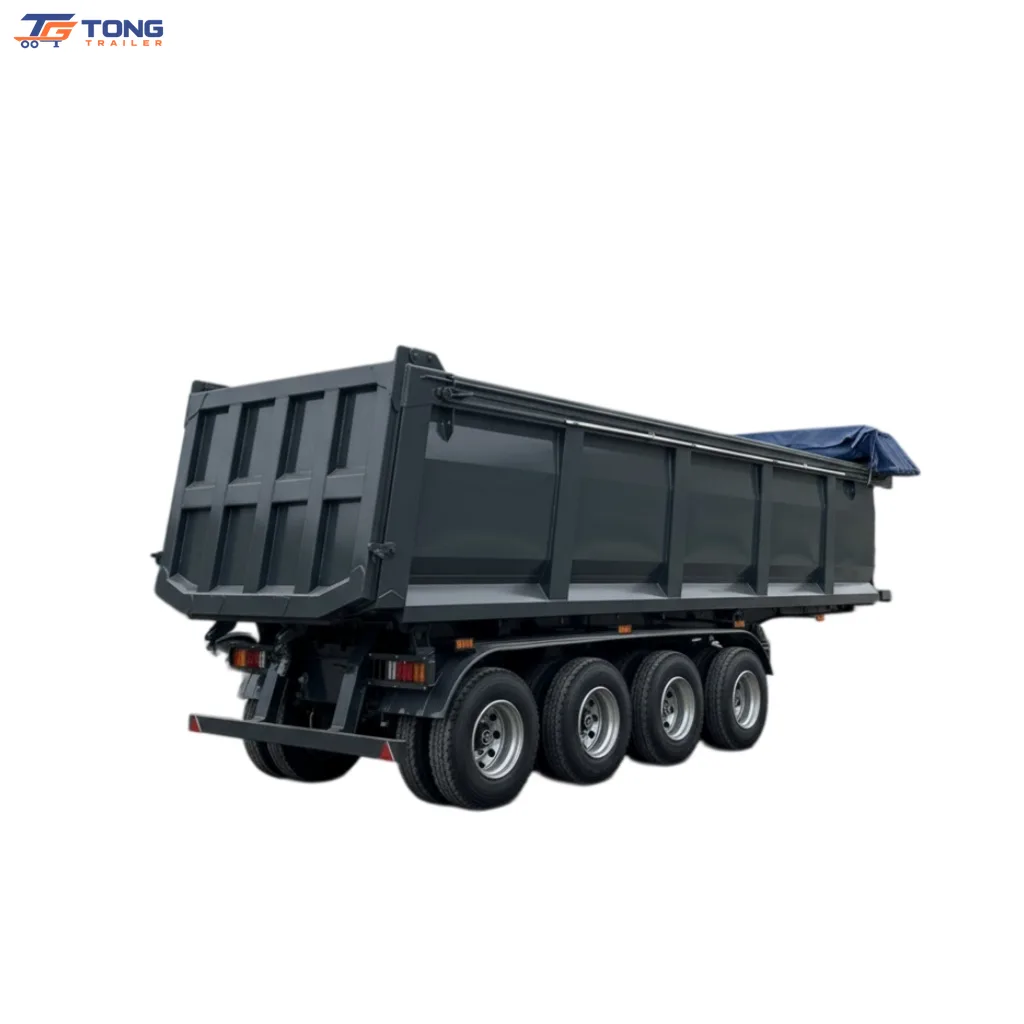
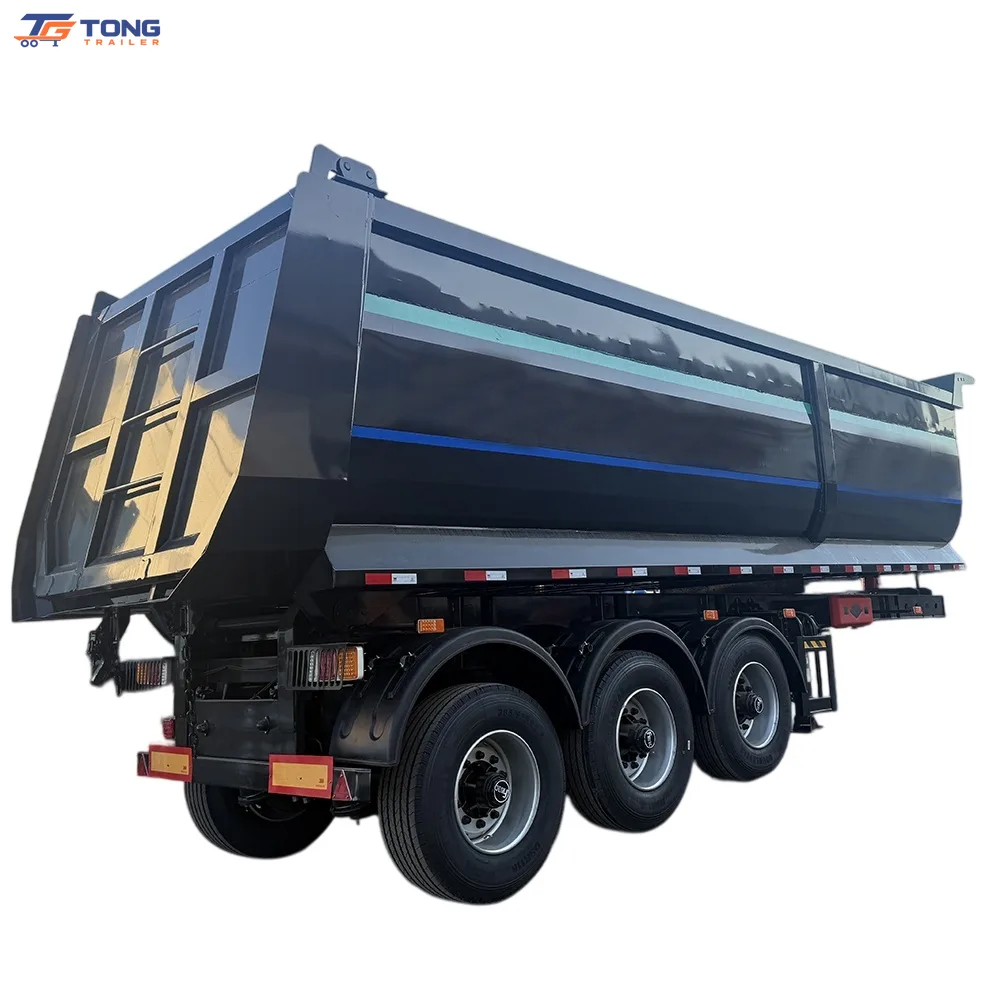
A hydraulic dump trailer is a common workhorse in Southeast Asia mining fleets (3 axle dump semi trailer). It hauls ore, overburden and aggregates, then tips the load by hydraulic power (3 Axle Hydraulic Dump Semi). This article explains where these trailers fit and how to choose one (3 axle tipper trailer |).
What a Hydraulic Dump Trailer Does on a Mine Site
A hydraulic dump trailer carries loose material in a steel tipper body (Hydraulic Rear Dump Semi Trailer). A hydraulic cylinder lifts the body, so the load slides out the rear. The tractor unit stays in place during tipping. Therefore, one driver can unload without extra equipment.
Most mining units are semi-trailers with three axles. The third axle adds stability under heavy loads. It also spreads weight across more tires on soft ground.
Tongtrailer builds these units for mine and quarry material transport. The tipper body is steel. Hydraulic power comes from the tractor or a separate system.
Rear Tipper Versus Side Tipper
A rear tipper dumps material behind the trailer. It suits narrow benches and stockpiles. A side tipper dumps to the left or right. It helps where the truck cannot drive forward after unloading.
For most Southeast Asia mining sites, the rear tipper is the standard choice. It matches loading by excavator and dumping at the edge of a pit.
Why 3 Axles Suit Southeast Asia Mining Conditions
Three axles give a good balance of payload and traction. On wet or uneven roads, more tires mean better grip. Besides, a 3-axle trailer turns tighter than a longer 4-axle unit.
Many mines in the region work on unpaved haul roads. Rain makes these roads soft and slippery. A 3-axle hydraulic dump trailer handles these conditions well.
Payload matters too. A this 40 ton semi-trailer for mining fits mid-size fleets. It moves steady volume without overloading weak road sections.
Weight and Road Limits
Check local road rules before you buy. Some routes limit axle load. Others limit total gross weight. A 3-axle unit often stays within these limits better than larger setups.
Specifications That Matter When You Choose
Buyers should compare a few key figures. These decide whether a trailer fits your mine and your tractor.
| Specification | What to Check | Why It Matters |
|---|---|---|
| Max payload | Over 30,000 kg on many models | Sets daily tonnage per trip |
| Axle configuration | 3 axle | Traction and weight spread |
| Trailer type | Hydraulic dump semi-trailer, rear tipper | Matches loading method |
| Application | Mining, special site operation | Confirms duty cycle |
| Overall length | 11,280 mm on some models | Fits haul roads and tips |
| Overall width | 2,495 mm on some models | Fits lane and gate width |
A heavy duty hydraulic dump semi trailer trailer with 3 or 4 axles suits larger mines. Its payload range is 40,000 to 60,000 kg. Overall length is 11,280 mm and width is 2,495 mm on that model.

However, bigger is not always better. Match payload to your excavator cycle and road strength. Otherwise, you may slow the whole fleet.
Hydraulic System Checks
Ask about cylinder size, pump type and oil capacity. A slow tip cycle wastes time at the stockpile. A weak system struggles with wet, sticky material.
Also check body steel thickness and floor design. Abrasive ore wears thin floors fast.
Applications Across Southeast Asia
Mining in Southeast Asia covers many materials. Common loads include coal, tin, nickel, bauxite and construction stone.
- Coal hauling: short cycles, high volume, dusty sites.
- Nickel and bauxite: heavy, abrasive ore that wears the body.
- Tin and aggregate: mixed sizes, often wet and sticky.
- Quarry work: crushed stone moved to crushers and stockpiles.
In each case, the hydraulic dump trailer tips fast and returns to the face. That keeps the excavator working instead of waiting.
Site and Climate Factors
The region has heavy rain and high humidity. Therefore, rust protection and sealed hydraulic parts matter. Mud on haul roads also raises rolling resistance. Good tires and correct axle load help here.
Practical Tips for Fleet Operators
Good habits extend trailer life. Small checks prevent big downtime.
- Inspect the hydraulic cylinder and hoses weekly.
- Keep the tipper body clean after sticky loads.
- Check tire pressure before each shift.
- Grease pivot points on schedule.
- Train drivers to tip on level ground only.
- Watch for cracks near the body hinges.
Also plan spare parts before the rainy season. Shipping delays can stop a fleet for weeks.
Loading and Tipping Safety
Never tip on a side slope. The trailer can roll over. Keep people clear of the rear during dumping. Besides, confirm the tailgate opens fully before the body lifts.
For special site operation, follow the site safety plan. Each mine sets its own rules.
Conclusion
A hydraulic dump trailer is a practical tool for Southeast Asia mining. Three axles balance payload, traction and road limits. Choose payload and body steel to match your material. Then maintain the hydraulic system and body with care.
Tongtrailer manufactures heavy-duty semi-trailers for mining and export. Review the models on our site and match one to your fleet. Contact us for current specifications and a quote.
FAQ
What is a hydraulic dump trailer used for?
It hauls and unloads loose material like ore, coal and aggregate. A hydraulic cylinder lifts the tipper body to dump the load.
How much can a 3 axle hydraulic dump trailer carry?
Many models carry over 30,000 kg. Some 40-60 ton models list a payload range of 40,000 to 60,000 kg.
Why choose 3 axles instead of 4?
Three axles turn tighter and suit softer roads. They also help stay within local axle load limits.
What is the difference between a rear tipper and a side tipper?
A rear tipper dumps behind the trailer. A side tipper dumps left or right, which helps in tight spaces.
What should I check before buying?
Check payload, axle configuration, trailer type and application. Also review length, width and hydraulic system quality.
Can these trailers work in heavy rain?
Yes, with correct maintenance. Check seals, hoses and rust protection often during the wet season.
Which loads wear the tipper body most?
Abrasive ore such as nickel and bauxite wears floors and walls fastest. Thicker steel lasts longer.