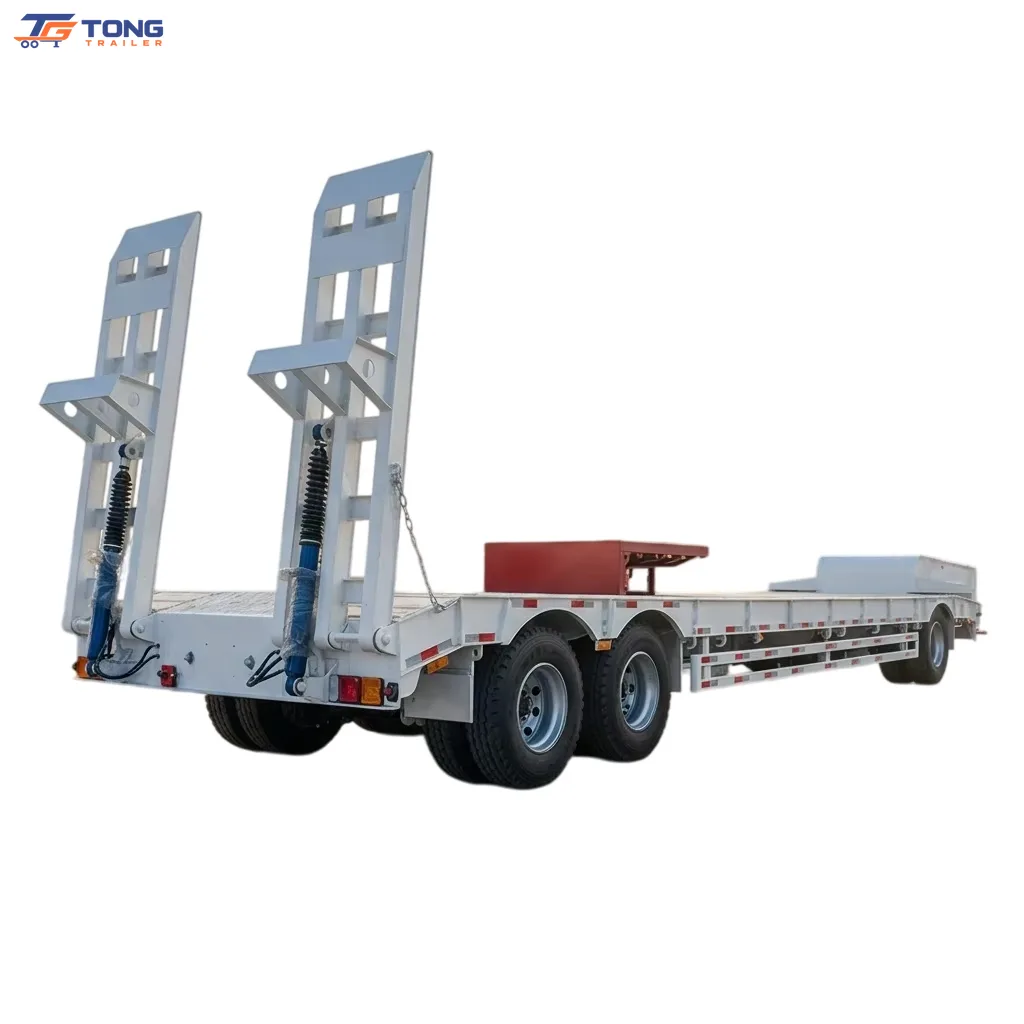
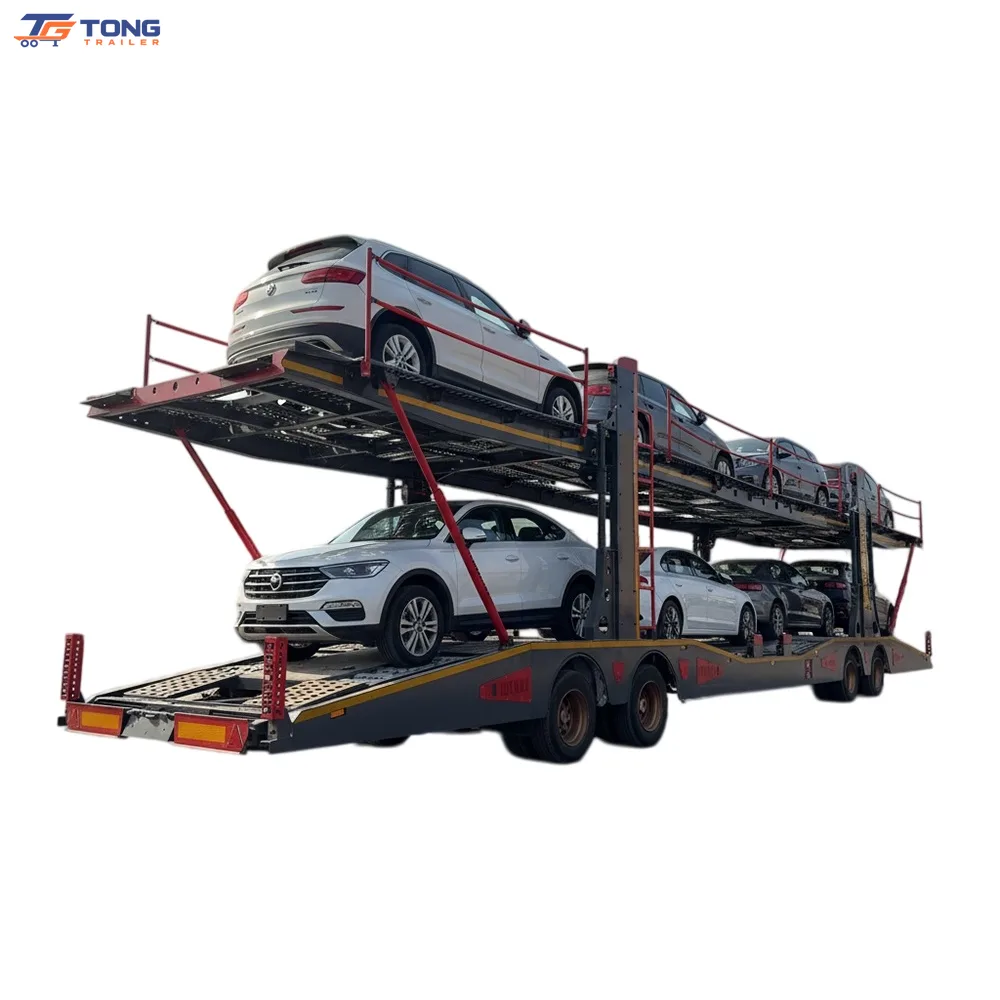
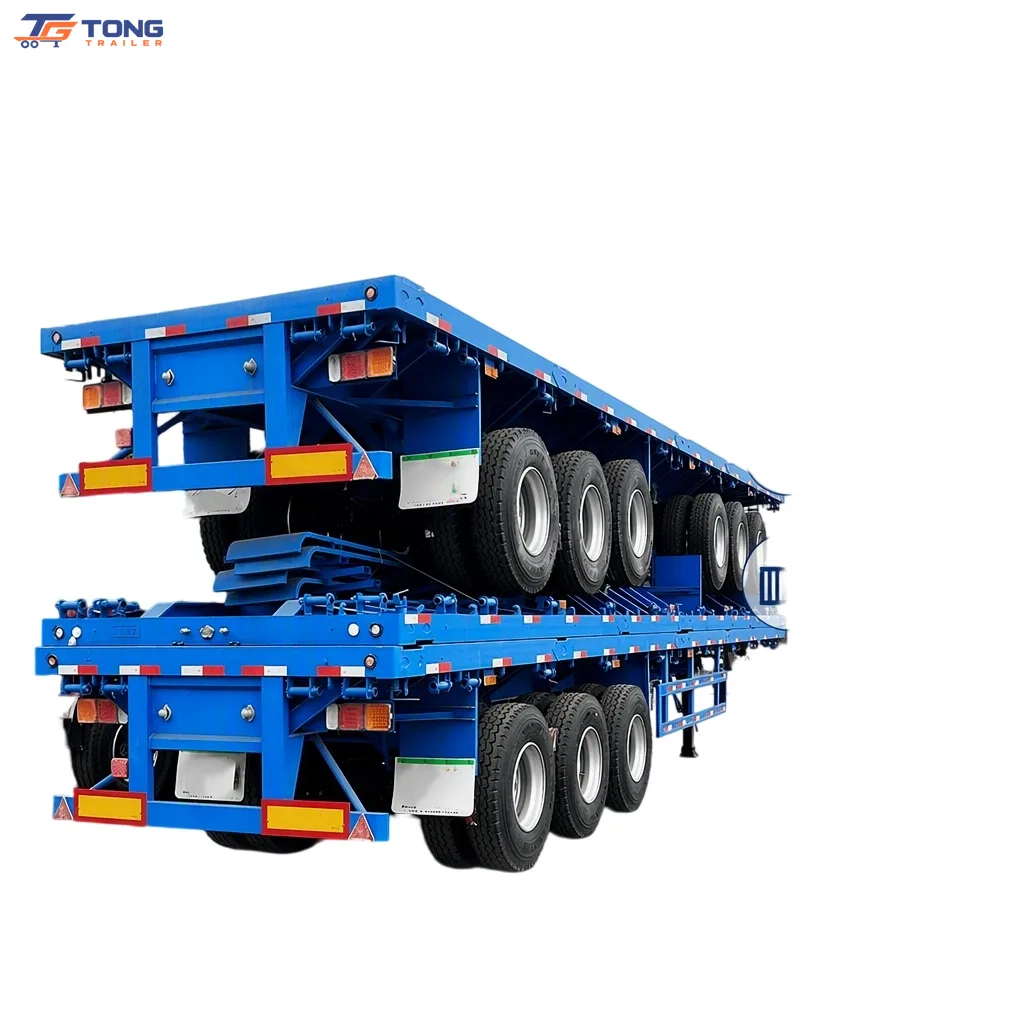
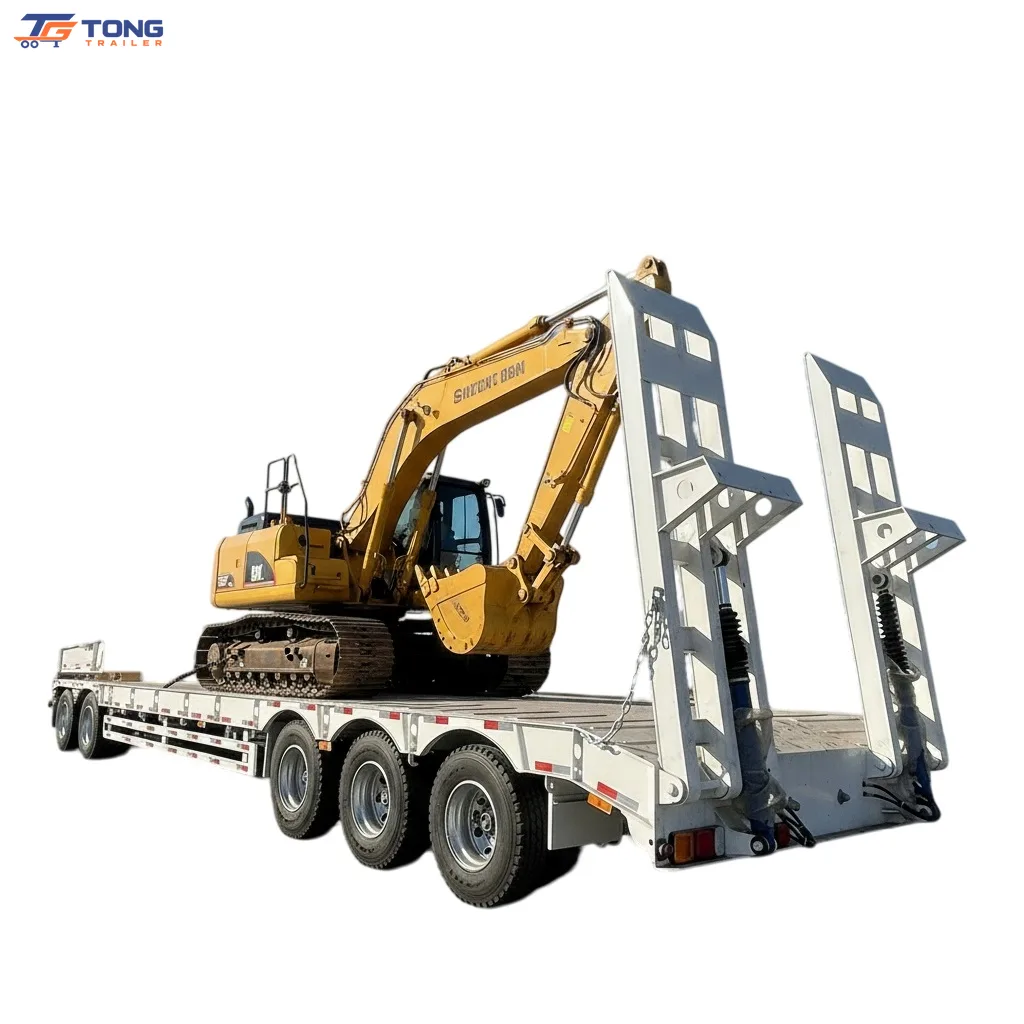
A flatbed semi trailer for sale at 60T to 150T payload is a heavy-duty investment (heavy load lowbed semi trailer). It moves containers, steel, machinery and general cargo (Hydraulic Car Carrier Semi-Trailer 2). This guide helps international buyers specify the right unit.
What Is a Flatbed Semi Trailer?
A flatbed semi trailer is a platform trailer without side walls. It couples to a tractor unit through a kingpin. The flat deck carries containers, pipes, steel coils and oversized freight.
Payload ratings in this class range from 60T to 150T. The rating depends on axle count, deck steel and suspension design. Therefore, buyers must match the trailer to the real cargo weight.
Tongtrailer manufactures and exports these units from China. Models include 2, 3 and 4 axle configurations. Each unit is customizable for container locks or a plain steel deck.
How to Choose the Right Payload and Axle Count
Payload choice drives every other decision. Start with your heaviest regular load, not your average load.
- 30T class: light container and pallet work
- 60T class: standard container and steel transport
- 80T to 100T class: heavy machinery and dense cargo
- 150T class: project cargo and mine or port duty
Axle count follows payload. More axles spread the load and reduce road stress. However, more axles also raise tare weight and cost.
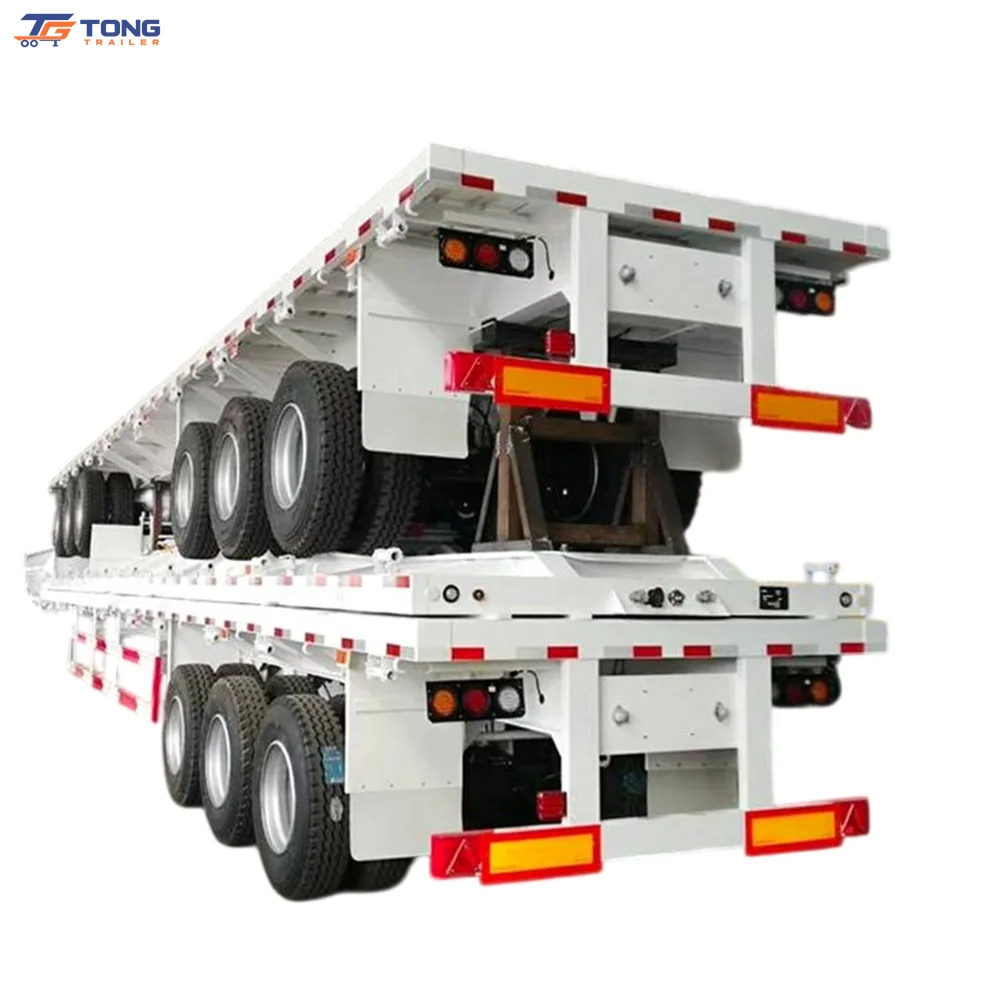
A 3 axle flatbed semi trailer 40 ton container deck suits mixed fleets. It handles 20ft and 40ft containers with twist locks. For heavier duty, a 3 Axle Flatbed Semi-Trailer 60T-150T payload at 13000mm length offers more deck space.
A 4 axle flatbed semi trailer 50t steel deck adds stability for dense loads. The extra axle improves braking and load distribution. Therefore, it suits long-haul routes with variable cargo.
Specifications That Matter
Buyers should review five areas before ordering. Each one affects safety and service life.
- Max payload: confirm the exact rating you need, from 60T to 150T.
- Deck: steel deck thickness and surface treatment.
- Axles: count, brand and load rating per axle.
- Suspension: mechanical leaf spring or air suspension.
- Dimensions: overall length, width and kingpin position.
The 3 axle flatbed semi-trailer 60T-150T model lists a payload capacity of 60,000 / 80,000 / 100,000 / 150,000 KG. It is customizable. Its application covers container and general cargo transport.
The this 30 ton uses a 3 axle steel deck. Its max payload is over 30,000 kg. Besides, it is classed as a heavy duty vehicle.
For car transport, a 3 axle car carrier trailer for sale offers 60T-150T payload. A hydraulic car carrier semi-trailer with 2 axles covers the same range. These units serve vehicle logistics fleets.
| Model Type | Axles | Payload Range | Typical Use |
|---|---|---|---|
| Flatbed | 3 | 60T-150T | Containers, general cargo |
| Flatbed | 3 | >30,000 kg | Steel deck haulage |
| Flatbed | 4 | >30,000 kg | Dense and heavy loads |
| Car carrier | 2-3 | 60T-150T | Vehicle transport |
Applications and Market Notes
Flatbed trailers serve many sectors. Container drayage is the most common. Steel distributors use them for coils, beams and plate. Construction firms move equipment and precast parts.
In ports, high-payload units reduce trips. That lowers fuel and labor cost per tonne. In mining regions, 100T to 150T units handle project cargo.
Market conditions vary by region. Road regulations limit axle loads in many countries. Therefore, check local rules before choosing a 150T unit. Some markets also require specific lighting or braking systems.
Tongtrailer builds units for export. Buyers should confirm voltage, tire size and coupling standards for their market.
Practical Buying Tips
Follow these steps to avoid costly mistakes.
- Define your cargo weight and volume first.
- Match axle count to local road limits.
- Ask for the deck drawing and kingpin position.
- Confirm tire size, brake system and lighting voltage.
- Request a pre-shipment inspection report.
- Plan spare parts: brake shoes, bearings and lamps.
Inspect the deck welding and paint before shipment. Check that twist locks align with your containers. Also verify the suspension type matches your routes.
For mixed fleets, standardize on one or two models. This simplifies spare parts and driver training. Besides, it reduces downtime.
Conclusion
Choosing a flatbed semi trailer for sale at 60T to 150T requires clear payload data. Axle count, deck design and suspension all matter. Match the unit to your cargo and local rules.
Tongtrailer offers 2, 3 and 4 axle flatbed and car carrier options. Payloads range from 30T to 150T. Contact the team with your cargo profile for a specification and quote.
FAQ
What payload range is available for these flatbed trailers?
Available ratings include 60T, 80T, 100T and 150T. A 30T class model is also offered. Ratings are customizable.
How many axles do I need for a 100T payload?
It depends on local axle load limits. Most buyers choose 3 or 4 axles for 100T duty. Confirm road rules in your market first.
What is the overall length of the 60T-150T flatbed model?
The 3 axle flatbed semi-trailer 60T-150T model lists an overall length of 13000mm. Other lengths are customizable.
Can these trailers carry shipping containers?
Yes. Flatbed models can be fitted with twist locks. They then carry 20ft and 40ft containers safely.
What is the difference between a flatbed and a car carrier?
A flatbed has a plain platform deck. A car carrier has a specialized structure for vehicles. Hydraulic car carrier models use 2 axles.
Which suspension type should I choose?
Mechanical leaf spring suspension is simple and durable. Air suspension gives smoother ride and load control. Choose based on cargo and road quality.
Do you provide customization?
Yes. Payload, length, deck and axle count can be customized. Send your cargo details for a specification.