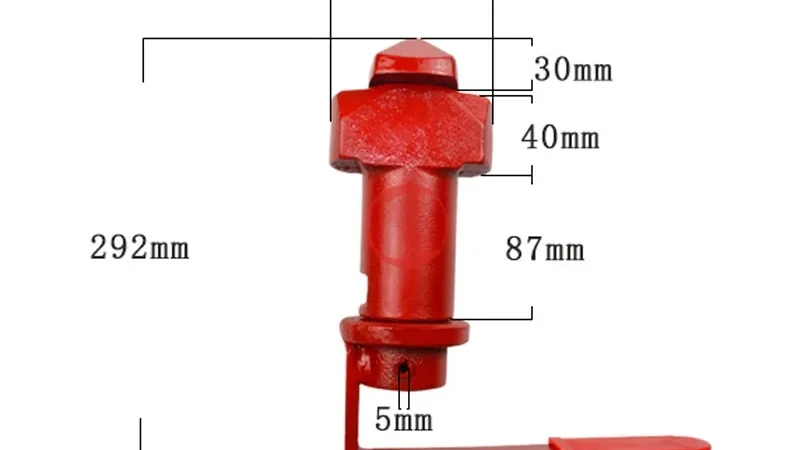
A 20ft 40ft container chassis carries both box lengths, so buyers now judge a skeleton trailer by how fast it converts between positions (40 Gooseneck Skeletal Container Chassis). Twist lock positions are the fixed or movable mounting points on the frame where the container corner castings lock down. The layout of these points decides whether you reposition locks by hand or run a fixed dual-position frame.
What 20ft 40ft Container Chassis Twist Lock Positions Are
Twist locks are the locking heads that grip the corner castings of a container. Each head turns a pin to lock and unlock the box. On a 20ft 40ft container chassis, the frame carries several lock positions along its length.
A 20ft container uses four locks close together near the middle of the frame. A 40ft container uses four locks near the front and rear ends. The distance between the front and rear lock groups sets the position for each box length.
Two layout families exist. One uses movable or sliding locks that the operator repositions. The other uses fixed dual-position frames with dedicated lock sets for each length.
Two Conversion Approaches: Sliding Locks Versus Fixed Frames
Sliding or repositionable twist locks
Here the lock heads sit in tracks or bolt slots. The operator slides them to the 20ft or 40ft position and pins them down. Conversion happens at the yard with basic tools.
- Faster changeover between box lengths.
- One frame serves both sizes.
- More moving parts to inspect and maintain.
- Lock pins and tracks wear over time.
Fixed dual-position frames
Here the frame carries separate lock sets for 20ft and 40ft. The operator uses one set and leaves the other idle. No parts move.
- Fewer moving parts and simpler inspection.
- Predictable tare weight.
- Conversion means choosing which locks to engage.
- Frame layout is longer and heavier in some designs.
Therefore, the choice depends on your container mix and how often you switch lengths.
What Each Approach Means for Tare Weight, Deck Height and Inspection
Tare weight
Sliding lock hardware adds rails, tracks and pins. This adds mass to the frame. Fixed frames avoid the tracks but may need extra cross members to hold both lock sets. Always ask the manufacturer for the tare weight of the exact configuration, not a generic figure.
Deck height
Repositionable lock heads sit in raised tracks in some designs. This can lift the deck height slightly. Fixed frames keep a flatter top surface. Deck height matters for loading ramps and for yard crane clearance.
Inspection
Sliding locks need checks on pin wear, track condition and lock rotation. Fixed frames need checks on weld condition and lock head play. Both need a routine check of the twist lock pin and its housing before each trip.
Specifications That Matter When You Specify Lock Positions
Load capacity comes first. Our 3 Axle 20ft 40ft Skeleton Semi Trailer 60T Container Chassis is rated at 60T. The 20ft 40ft Skeleton Container Semi Trailer 50T Frame Chassis is rated at 50T. Match the rating to your heaviest legal load, not to the average load.
Axle count affects the frame layout and the space around the lock groups. A three-axle unit spreads load across more wheels. Check that the rear lock group sits clear of the axle line and the suspension parts.
Frame material and cross members control stiffness at the lock points. Ask for the lock spacing drawing for both the 20ft and 40ft positions. Confirm the lock head type matches the corner castings on your containers.
Besides capacity, confirm the locking pin diameter and the lock head height. These details decide whether your containers sit flat and lock without force.
Matching the Chassis to Your Container Mix
Fleets that haul mostly one length should favor a fixed frame. It is simpler to inspect and has fewer wear points. Fleets that switch lengths often should favor repositionable locks. The yard crew can convert the unit without a second trailer.
For mixed operations, one flexible unit can replace two fixed-length trailers. That reduces yard space and registration costs. However, it also means every driver must know the lock procedure.
A steel skeleton frame suits port and depot work where loads stay in the container. Our Steel Skeleton Semi Trailer 20ft 40ft Container Chassis 50T is one example of a steel build rated at 50T for this duty.
Distributors should stock the configuration their local market uses most. Ask buyers how often they switch lengths before quoting.
Practical Tips Before You Order
- Ask for a lock position drawing with dimensions for both lengths.
- Confirm the tare weight of the exact configuration.
- Check that lock heads match your container corner castings.
- Ask how the locks are secured in each position.
- Request the inspection points for the lock pins and tracks.
- Confirm the load rating against your heaviest load.
- Train drivers on the conversion procedure before first use.
Keep a simple log of lock checks per unit. A short visual check before each trip catches most lock problems early.
Conclusion
Twist lock positions decide how your 20ft 40ft container chassis converts, and how much maintenance it needs. Choose sliding locks for frequent switching. Choose a fixed frame for simple inspection and steady duty. Then confirm capacity, tare weight and lock spacing with the manufacturer before you order. Contact the manufacturer with your container mix and we will help you specify the right frame layout.
FAQ
What are twist lock positions on a container chassis?
They are the mounting points on the frame where twist locks grip the container corner castings. Their spacing sets the 20ft or 40ft position.
How many twist locks does a 20ft 40ft container chassis use?
Four locks hold one container at a time. A dual-position frame carries two sets, so eight lock points in total.
Can I convert a fixed frame between 20ft and 40ft?
Yes, if it is a dual-position frame. You engage the lock set for the length you carry and leave the other set idle.
Do sliding locks add tare weight?
They can. Tracks and pins add mass, so always ask for the tare weight of the exact configuration.
How often should I inspect twist locks?
Check them visually before each trip. Inspect pins, tracks and lock rotation on a set schedule.
Does deck height change with lock layout?
It can. Raised lock tracks may lift the deck slightly, so confirm deck height before you buy.
Reviewed October 2026. Specifications from our own product line.