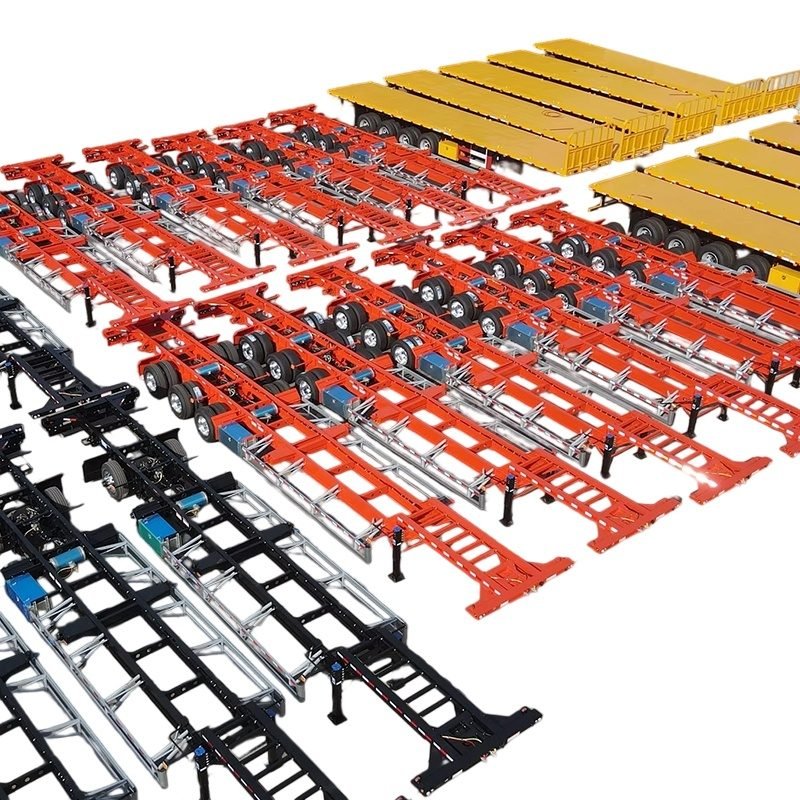
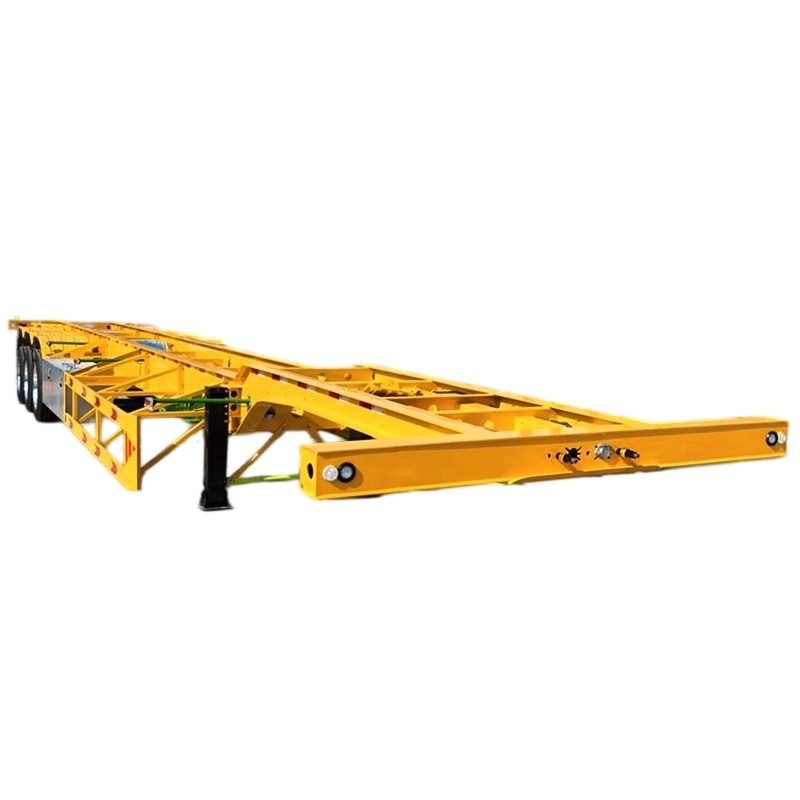
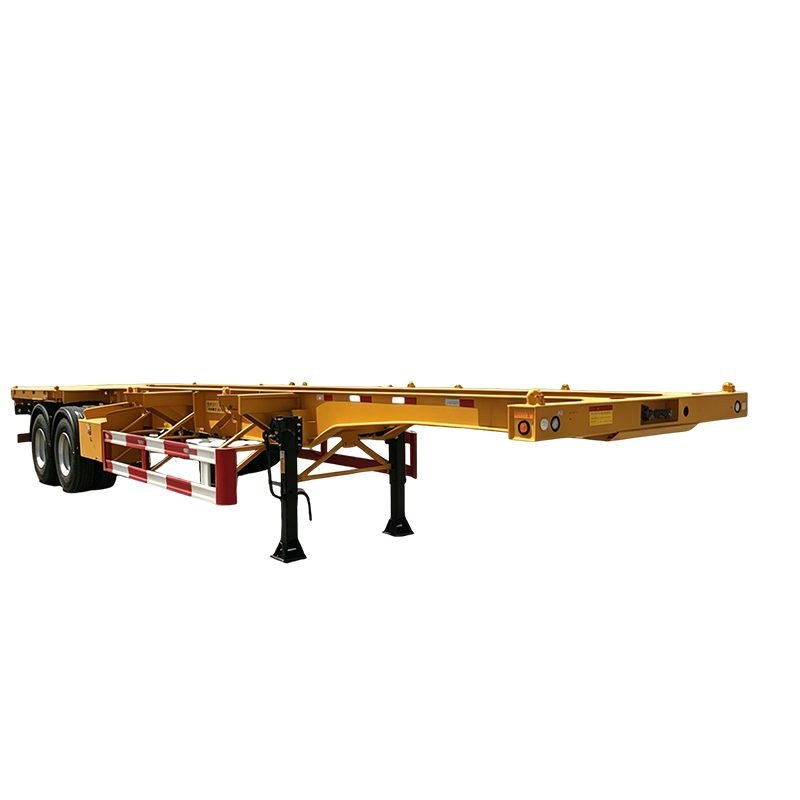
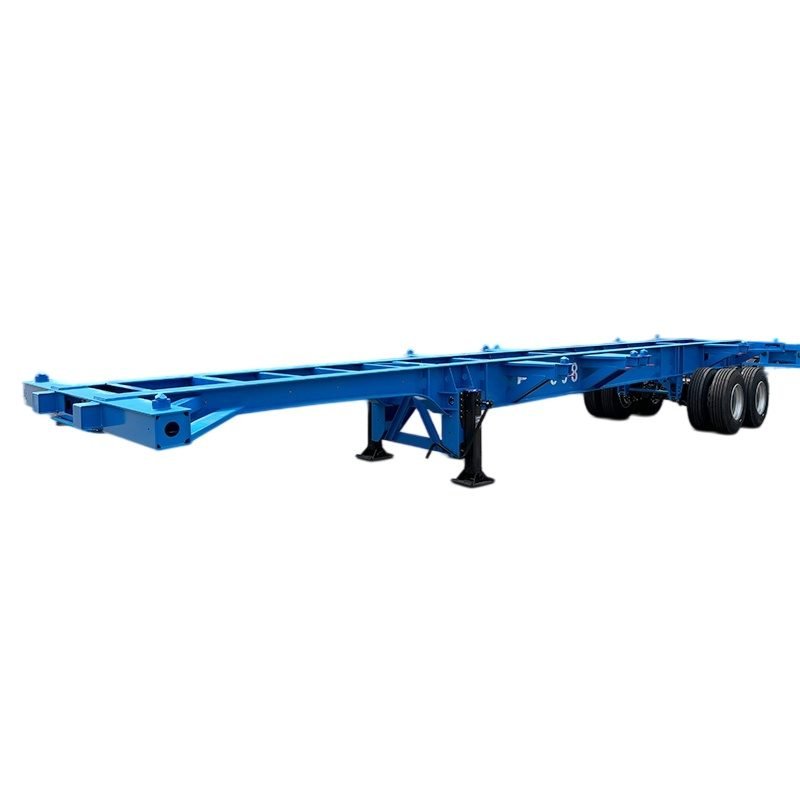
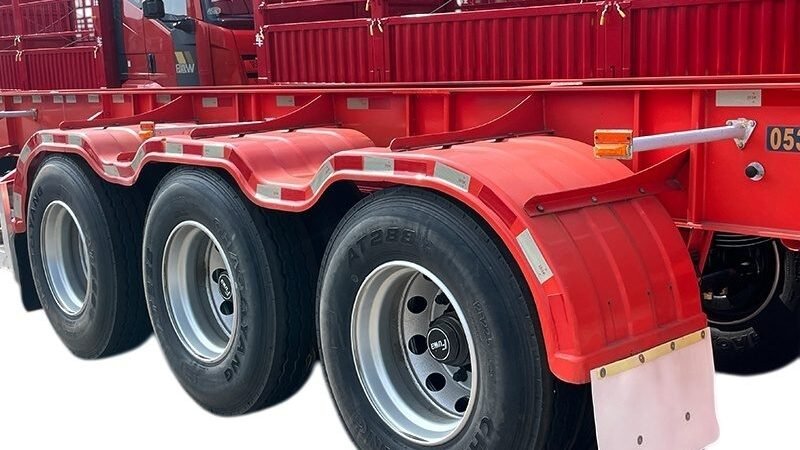
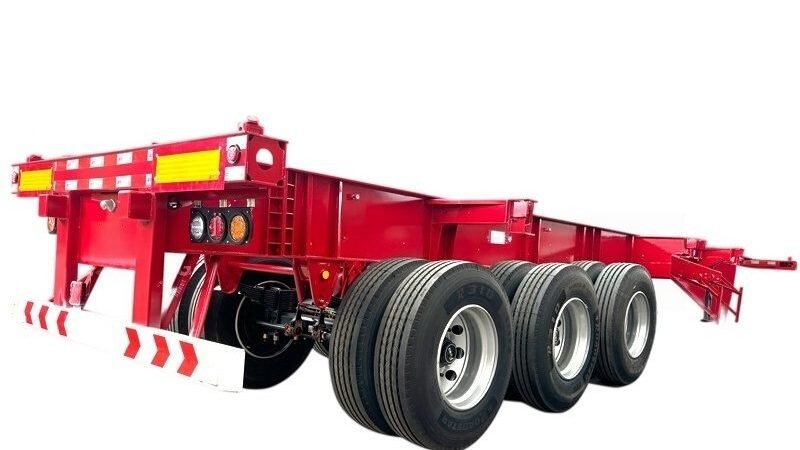
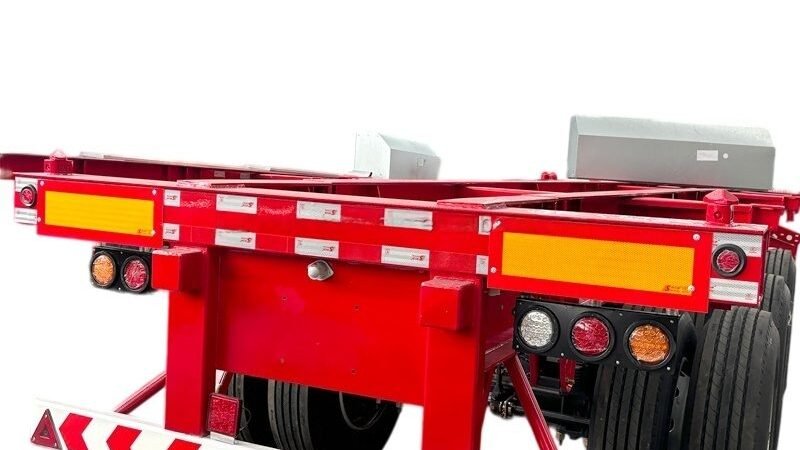
A gooseneck skeleton trailer is a container chassis with a raised front section that steps down to a lower cargo deck (20ft 40ft Skeleton Container Semi). This design changes how a 40ft container sits on the frame (3 Axle 20ft 40ft Skeleton). It also affects axle load, coupling height and fuel use (this axle skeleton). Buyers often weigh it against a standard flat chassis. This article explains the differences in plain terms.
What Is a Gooseneck Skeleton Trailer?
A skeleton trailer is a bare frame built to carry containers (Steel Skeleton Semi Trailer 20ft). It has no flatbed floor. Twist locks hold the box in place. The frame is light, so more payload goes to the cargo.
A gooseneck version adds a raised neck at the front. The neck arches up over the fifth wheel. The main deck then drops lower than a standard chassis deck. This lower deck is the key feature.
The gooseneck shape does three things:
- It lowers the container deck height.
- It keeps a stable coupling to the tractor.
- It can improve airflow over the load.
A standard chassis keeps one flat rail height from front to back. It is simpler to build and easier to repair. However, it sits higher than a gooseneck frame.
Gooseneck vs Standard Chassis: Key Differences
The table below compares the two designs on points that matter to fleet operators.
| Feature | Gooseneck skeleton trailer | Standard flat chassis |
|---|---|---|
| Deck height | Lower main deck | Higher, uniform deck |
| Centre of gravity | Lower for the cargo | Higher |
| Frame shape | Raised neck, stepped deck | Straight rail |
| Build complexity | More complex | Simpler |
| Repair ease | Moderate | Easier |
| Typical use | Long-haul, high-volume routes | Mixed and short-haul duty |
A lower deck lowers the centre of gravity. That can improve cornering stability with a tall 40ft box. It may also reduce overall vehicle height. Therefore, some operators gain headroom on routes with bridges or tunnels.
A standard chassis is simpler. Fewer frame sections mean fewer welds to inspect. For many fleets, that means faster maintenance.
Specifications That Matter for 40ft Container Work
Match the trailer to the container and the route. Check these points before you buy.

Load capacity
Capacity must cover the container plus cargo. Our range includes units rated at 50T and 60T. For example, the 40 Gooseneck Skeletal Container Chassis Semi Trailer 60T for 20ft 40ft Containers suits heavy-duty work. A lighter duty fleet may prefer a 50T unit.
Axle count
More axles spread the load. A tri-axle setup is common for 40ft boxes. The Gooseneck Container Chassis Tri-axle skeleton semi trailer 50T is one option. Four-axle frames carry more weight but add tare weight.
Deck height and coupling
The gooseneck neck must match your tractor's fifth wheel height. Confirm this before ordering. A mismatch causes poor weight distribution.
Twist locks
Check the lock positions for 20ft and 40ft boxes. Many frames accept both sizes. This adds flexibility for mixed loads.
Frame steel
Ask about the steel grade and weld quality. A skeleton frame carries all the load through its rails. Weak welds are a real risk.
Applications and Market Notes
Gooseneck frames suit long-haul container haulage. The lower deck helps on highway routes with steady 40ft loads. Port drayage fleets also use them where bridge height is tight.
Standard chassis remain popular for mixed duty. They handle 20ft and 40ft boxes without special coupling checks. Smaller fleets often start with a standard frame.
Consider your route profile. If you run fixed 40ft lanes, a gooseneck frame is a logical fit. If your loads vary, a standard chassis may be simpler to manage.
Our 40ft Skeleton Semi Trailer 50T Container Chassis is a straight option for 40ft work. For fleets that need both sizes, the 50T Skeleton Semi Trailer for 20ft and 40ft Containers covers mixed loads.
All units above are manufactured and exported by the manufacturer. Origin is China (Mainland).
Practical Tips Before You Buy
- Confirm the fifth wheel height of your tractors.
- Check the container sizes you actually haul.
- Match load rating to your heaviest legal load.
- Ask for the frame drawing and weld details.
- Plan a inspection schedule for the neck area.
- Compare tare weight against your payload needs.
Besides the trailer, check your twist lock spares. Worn locks cause container movement. Keep a small stock on hand.
Fuel use can differ between designs. A lower deck may reduce drag, but results vary by route and speed. Do not rely on claims alone. Test on your own lanes.
Conclusion
A gooseneck skeleton trailer lowers the deck and can improve stability for 40ft boxes. A standard chassis is simpler and easier to maintain. The right choice depends on your routes, loads and maintenance capacity. Review the specs, confirm coupling height, and match capacity to your duty cycle. Contact the manufacturer for a quote and current build options.
FAQ
What is a gooseneck skeleton trailer used for?
It carries 20ft and 40ft containers on a stepped frame. The lower deck suits long-haul and fixed-lane container work.
Is a gooseneck frame better than a standard chassis?
Not always. A gooseneck frame gives a lower deck and centre of gravity. A standard chassis is simpler and easier to repair.
Can a gooseneck skeleton trailer carry a 40ft container?
Yes. Many models accept both 20ft and 40ft boxes. Confirm the twist lock positions before ordering.
What load capacity should I choose?
Match capacity to your heaviest legal load. Our units range from 50T to 60T ratings. Choose based on route and cargo weight.
Does deck height affect fuel use?
It can. A lower deck may reduce drag, but results vary. Test on your own routes before assuming savings.
How many axles do I need for 40ft containers?
Tri-axle frames are common for 40ft work. Four-axle frames carry more weight but add tare weight. Check local axle load rules.
Who manufactures these trailers?
The manufacturer produces and exports them from China (Mainland). Ask for the frame drawing and weld details before you order.