The dump vs fence trailer choice shapes every haul cycle on a 60T road construction project in Peru (Fence Semi Trailer 2-4 Axle). Both are steel semi-trailers (4 Axle Steel Fence Semi). However, they carry different cargo and serve different jobs.
Peru's road projects often run in three zones: coastal desert, high Andes, and Amazon lowland (Ramp Low Bed Trailer Heavy). Each zone changes how a trailer performs. Therefore, buyers must match trailer type to terrain, cargo, and site access.
What Is a Dump Semi Trailer?
A dump semi trailer carries loose material in a steel body. A hydraulic cylinder lifts the body to tip cargo out. It suits sand, gravel, crushed stone, and soil.
Tipping needs a stable surface. On soft ground, a raised body can shift the load. Besides, the hydraulic system adds maintenance points.
What Is a fence semi trailer?
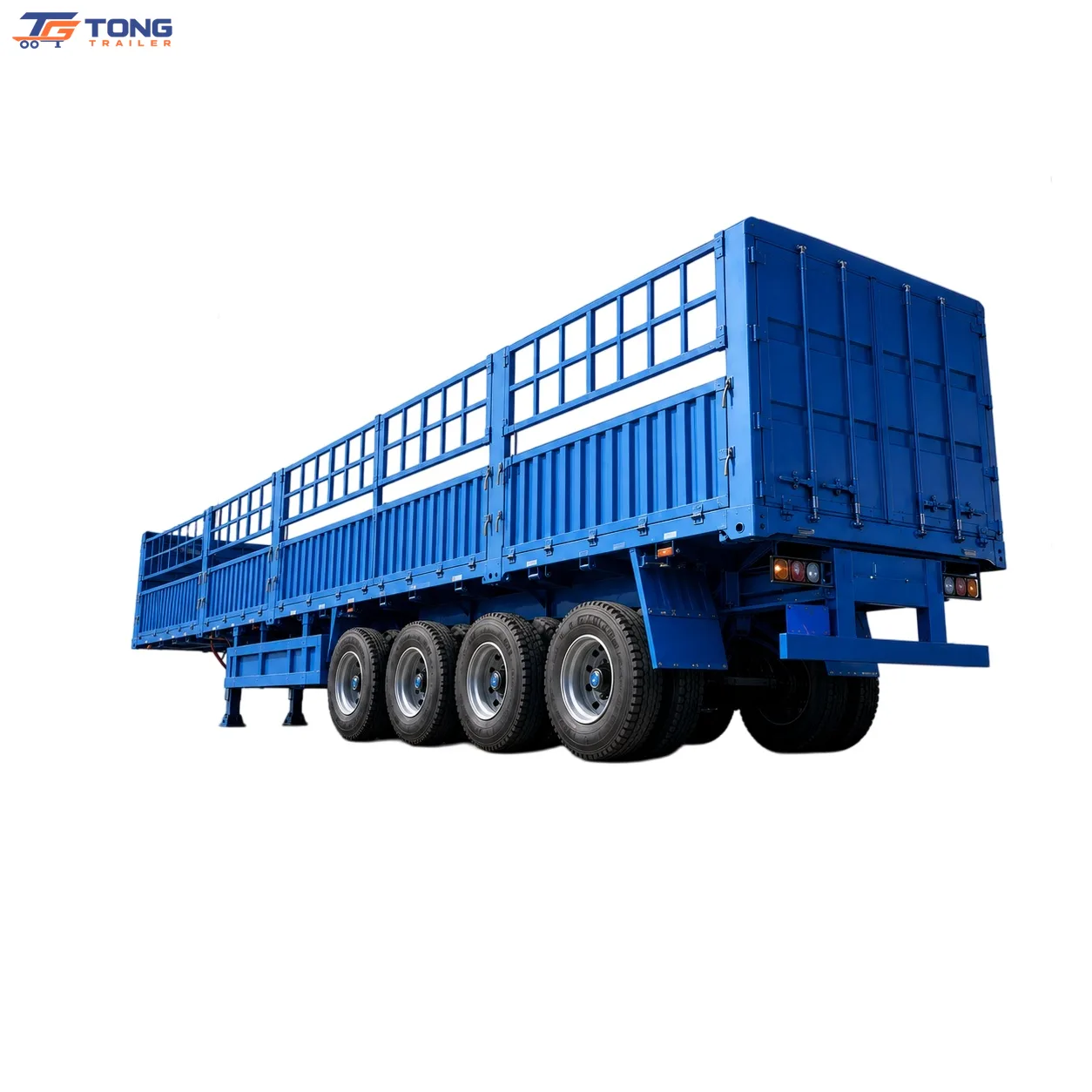
A fence semi trailer has a flat deck and steel side railings. The fence holds cargo in place during transport (this heavy duty). It suits bagged goods, pallets, pipes, and livestock.
Tongtrailer builds fence trailers from steel. Payload options run from 60,000 KG to 150,000 KG. Axle configurations range from 2 to 5 axles, depending on the model.
Dump vs Fence Trailer: Key Differences
The table below compares the two types on core points. Values come from the fence trailer product data.
| Point | Dump semi trailer | Fence semi trailer |
|---|---|---|
| Cargo type | Loose bulk material | Bagged, palletized, livestock |
| Unloading | Hydraulic tipping | Manual or forklift |
| Body style | Steel tipping body | Steel fence with railings |
| Payload range | Not specified here | 60,000–150,000 KG |
| Axle options | Not specified here | 2–5 axles |
For example, a 4 axle fence cargo trailer 60T steel semi-trailer moves palletized cement. A dump trailer moves the same cement only if it is loose.
How to Choose for a 60T Project in Peru
Start with the cargo. Loose aggregate favors a dump trailer. Bagged or palletized cargo favors a fence trailer. Mixed cargo favors a fence trailer with a removable fence.
Then check the route. Andes roads have steep grades and tight curves. A shorter wheelbase helps on switchbacks. Amazon routes bring rain and soft shoulders. A stable deck matters more there.
Next, confirm the payload. A 60T rating must cover cargo plus body weight. Tongtrailer fence trailers offer 60,000 / 80,000 / 100,000 / 150,000 KG payloads or custom values.
Finally, count axles. More axles spread load and reduce axle pressure. A 3-axle livestock semi trailer steel fence suits steady hauling. A 5-axle unit suits heavier total loads.
Specifications That Matter
Several numbers decide real-world performance.
- Payload capacity: 60,000–150,000 KG or customized.
- Axle configuration: 2–5 axles on fence models.
- Overall length: 12,500–13,000 MM on livestock fence models.
- Material: steel body and fence.
- Application: heavy-duty cargo hauling, agricultural and engineering transport.
However, payload alone is not enough. Tire rating, brake system, and suspension must match the load. Always request a full spec sheet before ordering.
Market Notes for Peru
Peru imports most heavy trailers. Therefore, port handling and shipping cost affect the final price. Callao and Paita are common entry points.
High-altitude sites reduce engine power and brake performance. So drivers should plan slower cycles. Dust on coastal sites also raises maintenance frequency.
Road construction projects often need both trailer types. A dump trailer feeds the crusher. A fence trailer moves rebar, pipes, and formwork. Fleet operators may buy both.
Practical Tips
- Match trailer type to cargo first, terrain second.
- Keep spare hydraulic parts if you run dump trailers.
- Check fence height for oversized cargo.
- Confirm the kingpin and landing gear fit your tractor.
- Ask for the axle and suspension layout in writing.
- Plan a maintenance schedule for dusty or wet sites.
Besides the trailer, train drivers on tipping safety. Most dump accidents happen during unloading, not driving.
Conclusion
The dump vs fence trailer decision follows the cargo. Loose material points to a dump trailer. Bagged, palletized, or livestock cargo points to a fence trailer. For a 60T road construction job in Peru, many fleets run both.
Tongtrailer manufactures steel fence semi-trailers from 60T to 150T with 2–5 axles. Share your cargo type, route, and payload target. The team will propose a matching configuration and quote.
FAQ
What is the main difference between a dump and a fence trailer?
A dump trailer tips its body to unload loose material. A fence trailer keeps cargo on a flat deck behind steel railings.
Which trailer suits a 60T road construction project in Peru?
It depends on the cargo. Use a dump trailer for aggregate. Use a fence trailer for bagged, palletized, or mixed loads.
What payload options does a Tongtrailer fence semi trailer offer?
Fence models offer 60,000 / 80,000 / 100,000 / 150,000 KG or customized payloads.
How many axles can a fence semi trailer have?
Tongtrailer fence semi trailers come with 2 to 5 axles, depending on the model and payload.
Can a fence trailer carry livestock?
Yes. Tongtrailer builds livestock semi-trailers with steel fences. Overall length is 12,500–13,000 MM on those models.
What applications suit a fence semi trailer?
Heavy-duty cargo hauling, agricultural transport, and engineering transport are common uses.
Why does terrain matter in Peru?
Andes grades, coastal dust, and Amazon rain each stress trailers differently. Terrain affects axle choice and maintenance planning.