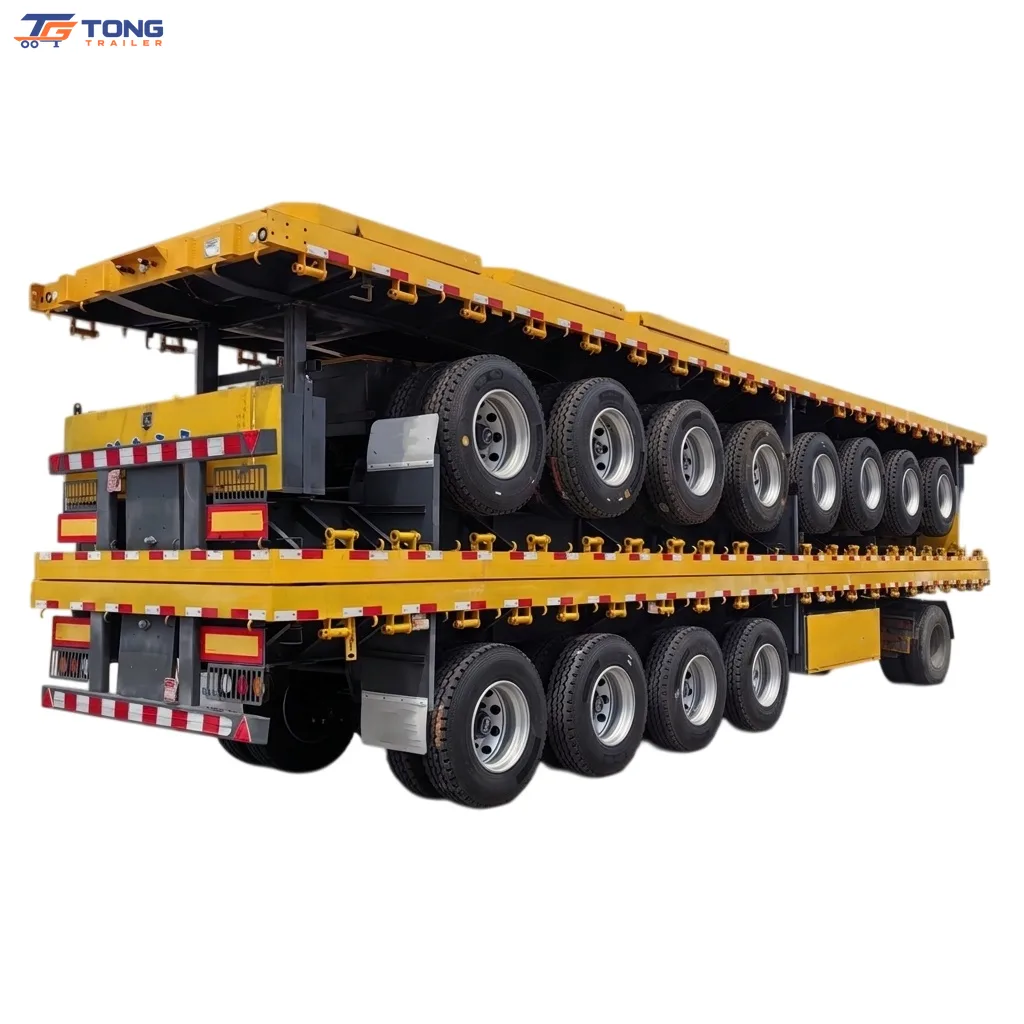
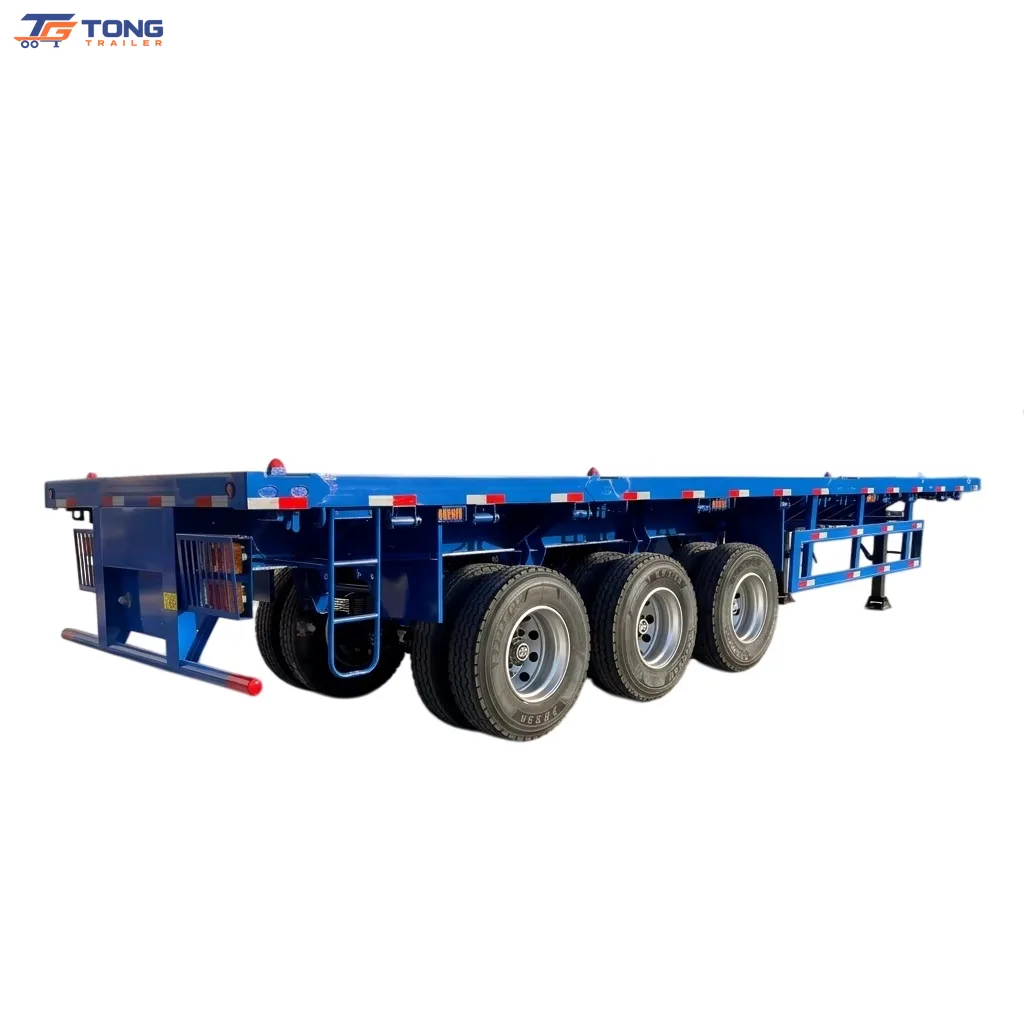
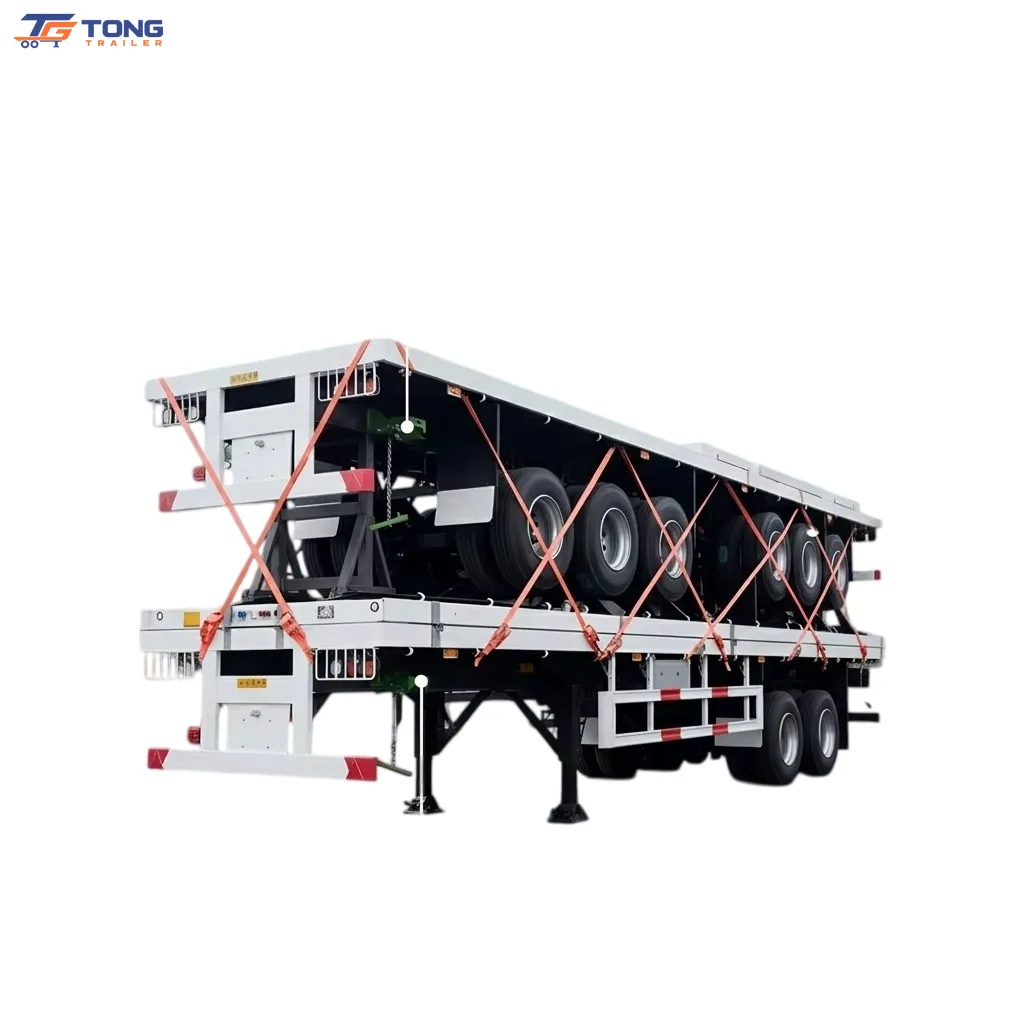
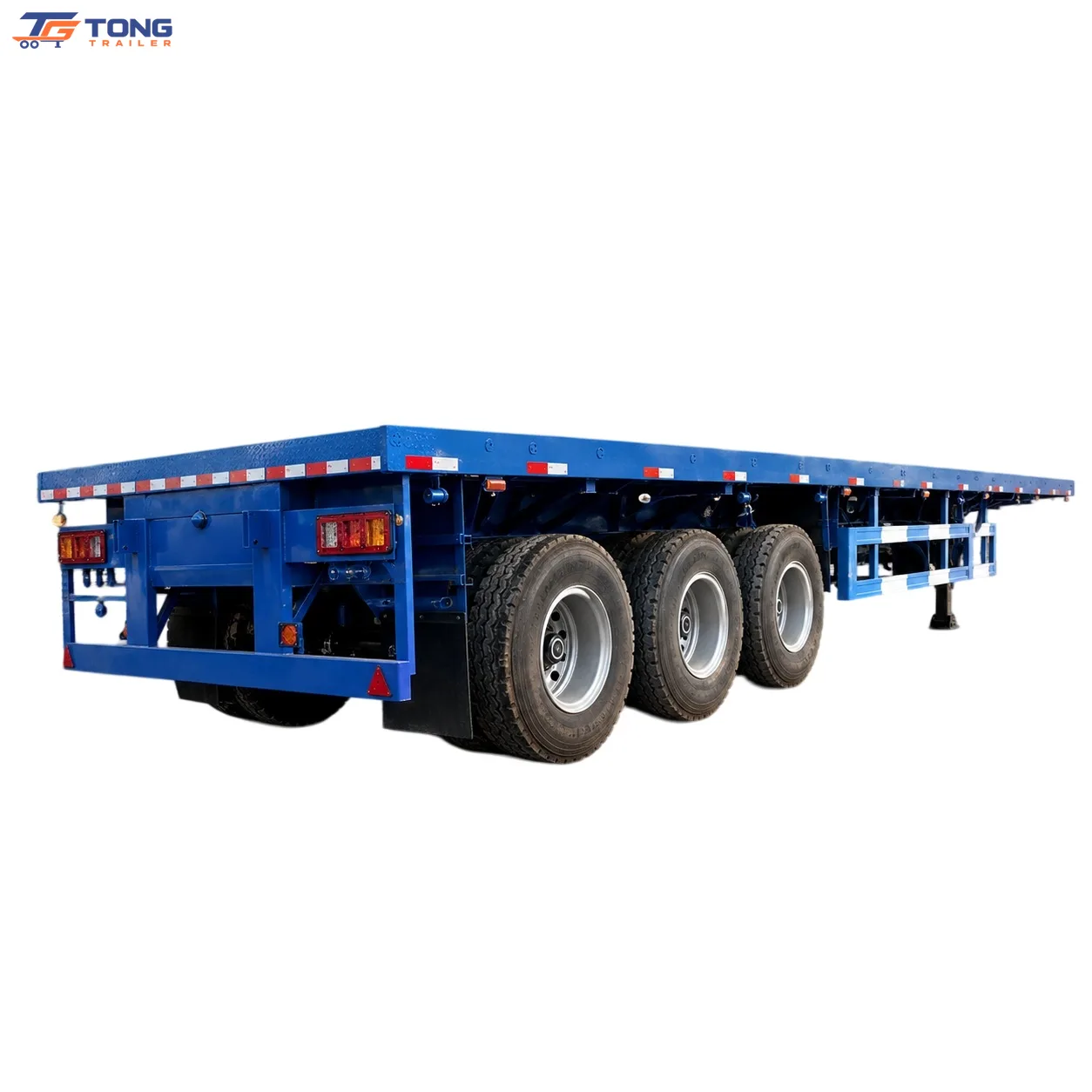
Container trailer maintenance protects your fleet, your cargo and your schedule (40ft container flatbed trailer |). For port operations, a 30T semi-trailer works hard every day (flatbed semi trailer). Therefore, a fixed inspection routine is not optional.
This guide covers daily checks, axle and brake care, steel frame inspection and market-specific tips (multi axle flatbed semi trailer). It is written for fleet operators, logistics companies and procurement managers. All checks use simple tools and metric units.
What Is a 40ft Container Trailer Chassis?
A container trailer chassis is the steel frame that carries a 20ft or 40ft container (40ft 3 Axle Flatbed Semi). It connects to a tractor unit and moves boxes between port, yard and warehouse.
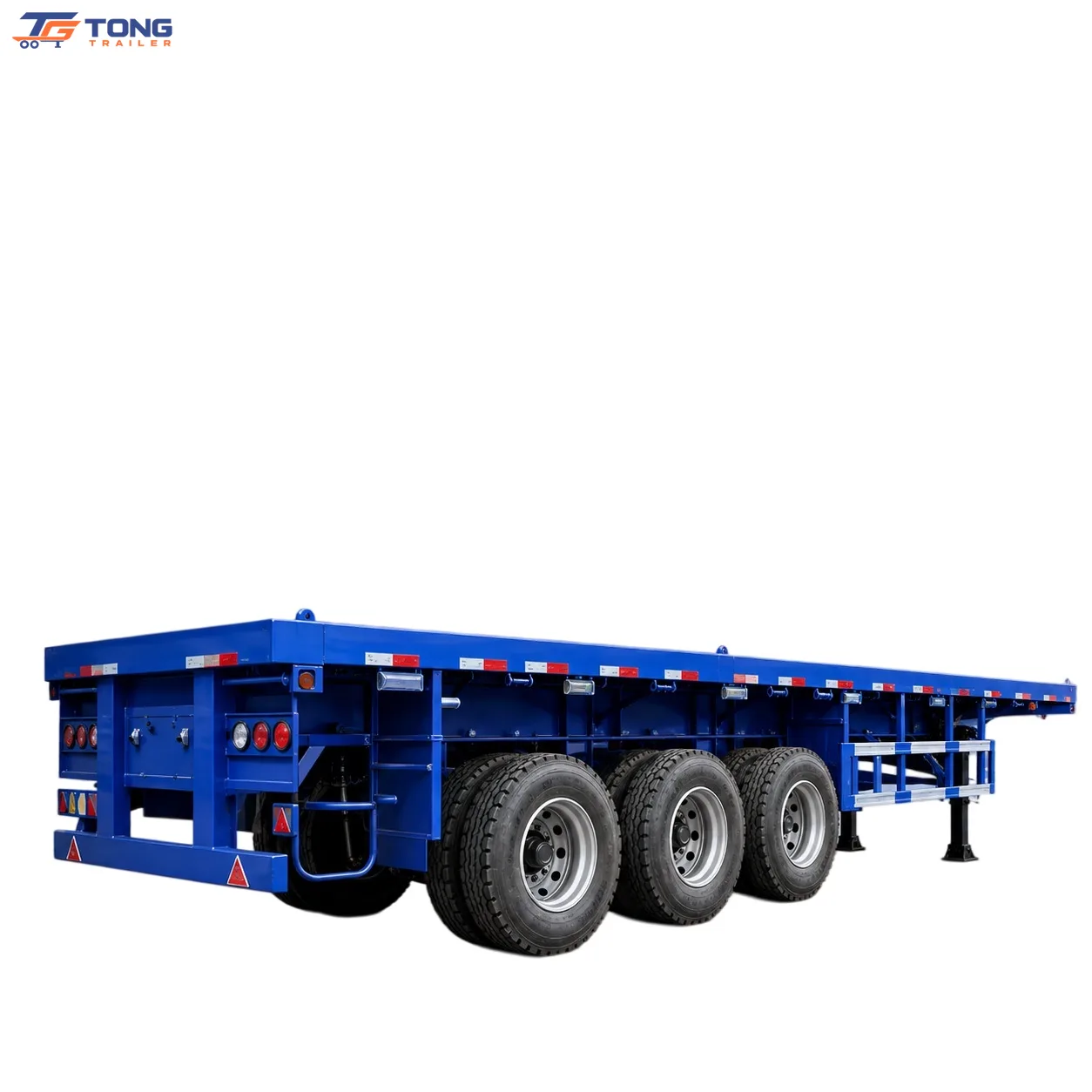
Most port fleets use a semi-trailer with a max payload over 30,000 KG (3 Axle Flatbed Semi Trailer). Common sizes are 12,000 MM x 2,500 MM for a 40ft unit. A 3-axle flatbed semi-trailer is a typical configuration for heavy container haulage (this axle flatbed).
The chassis includes the main beams, cross members, axles, suspension, brakes, tyres, landing gear and twist locks. Each part needs its own inspection interval.
Daily and Weekly Container Trailer Maintenance Checks
Daily checks take 10 to 15 minutes. They catch most problems before a container is loaded.
Daily walk-around
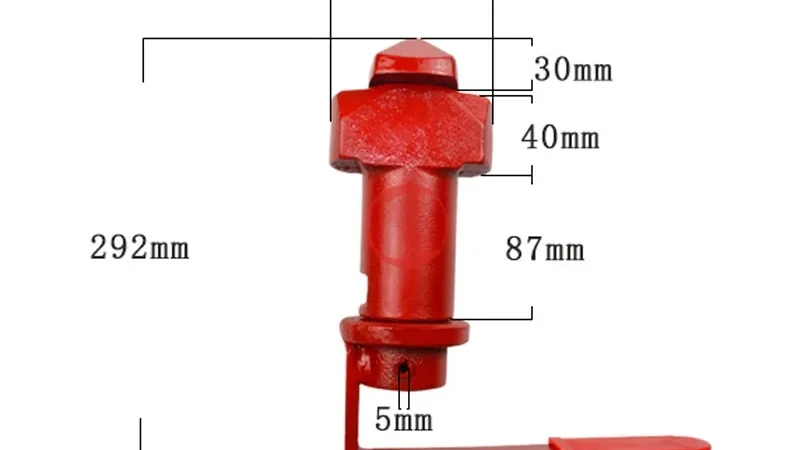
- Check all four twist locks for damage and correct locking.
- Look for cracks or bends in the main beams and cross members.
- Inspect tyres for cuts, bulges and low pressure.
- Test brake air lines for leaks or chafing.
- Confirm all lights and reflectors work.
Weekly checks
- Measure tyre tread depth and record it.
- Check wheel nut torque and look for rust streaks.
- Drain air tanks to remove water and oil.
- Inspect suspension springs and U-bolts.
- Grease the landing gear and king pin area.
Record every result in a log. A written history helps you plan repairs and control cost.
Axles, Brakes and Tyres: The Core of Container Trailer Maintenance
Axles, brakes and tyres carry the load. They also cause most roadside failures. Therefore, they deserve the closest attention.
Axle and bearing care
- Check bearing end play every 50,000 KM or six months.
- Replace contaminated grease immediately.
- Inspect axle beams for cracks near the welds.
- Confirm the axle alignment after any hard impact.
A 3-axle flatbed semi-trailer spreads load across six tyre positions. Uneven wear on one axle often points to alignment or bearing problems.
Brake system checks
- Test brake response at low speed before each shift.
- Check slack adjuster travel every week.
- Replace worn brake pads before they reach the drum.
- Bleed the air system if moisture is present.
Tyre management
- Keep pressure at the level stated by the tyre maker.
- Rotate tyres to balance wear across axles.
- Remove any tyre with exposed cords or sidewall damage.
- Store spare tyres out of direct sunlight.
Steel Frame and Structural Inspection
The steel frame is the backbone of the chassis. Rust and cracks reduce its strength over time.
Inspect the frame every month. Use a light and a small hammer. Listen for a dull sound, which can mean internal corrosion.
- Clean dirt and salt from the frame after coastal work.
- Touch up paint chips within the same week.
- Check welds around the king pin and suspension hangers.
- Verify that the container sits flat on all four corners.
A steel flatbed semi-trailer for 40ft or 60ft container haulage faces constant salt air at ports. Besides routine washing, apply a protective coating each year.
Choosing the Right Chassis for Port Fleets
Selection affects maintenance cost. Therefore, match the trailer to the real duty cycle.
| Factor | What to check |
|---|---|
| Payload | Over 30,000 KG for heavy boxes |
| Axle count | 3 axles for stable load spread |
| Length | 12,000 MM to 12,500 MM for 40ft |
| Material | Steel for port and yard work |
| Origin | China (Mainland), Guangdong |
A multi-axle flatbed semi-trailer 30T+ steel container haul unit suits high-cycle port work. For mixed cargo, a 40ft container flatbed trailer with steel semi-trailer 30T+ build offers flexibility.
Ask for the axle brand, brake type and suspension design. These details decide your spare parts plan. Tongtrailer builds heavy-duty semi-trailers for export markets and can confirm specifications on request.
Practical Tips for Port and Yard Operations
Port duty cycles are short but intense. Speeding and sharp turns damage tyres and axles.
- Keep yard speed under 20 KM/H (about 12 MPH).
- Avoid full-lock turns with a loaded container.
- Use a spotter when reversing into tight bays.
- Park on level ground to protect the suspension.
- Train drivers to report unusual noise at once.
Set a maintenance calendar by distance, not only by time. For example, service brakes every 10,000 KM in dusty yards.
Keep a spare parts stock of brake pads, seals, lamps and wheel nuts. This cuts downtime when a unit fails. Also, photograph every fault for warranty claims.
Conclusion
Good container trailer maintenance is a system, not a single task. Daily checks, planned axle and brake service, and frame care extend fleet life. They also reduce breakdowns and delivery delays.
Review your inspection logs each month. Replace worn parts early. Train your team on the same standard.
Tongtrailer supplies heavy-duty semi-trailers and components for international fleets. Contact us with your duty cycle and payload needs. We will help you match the right chassis to your operation.
FAQ
How often should I inspect a 30T container trailer chassis?
Daily walk-around checks plus weekly and monthly deeper inspections. Axles and brakes need service every 50,000 KM or six months.
What is the max payload of these semi-trailers?
The listed models carry over 30,000 KG. Confirm the exact rating for your route and local rules.
Which axle configuration suits port work?
A 3-axle flatbed semi-trailer is common for container and heavy cargo transport. It spreads load across more tyre positions.
What size is a typical 40ft chassis?
Around 12,000 MM x 2,500 MM. A 40ft 3-axle flatbed unit may measure about 12,500 MM overall.
Why does salt air matter for container trailer maintenance?
Salt speeds up rust on steel frames and fittings. Wash the chassis often and repair paint chips quickly.
Where are these trailers made?
China (Mainland), Guangdong province. Material is steel, and the type is semi-trailer.
Can I use one chassis for 20ft and 40ft containers?
Many models handle both sizes. Check the twist lock positions and the rated payload before loading.